In this article you’ll learn
What being mortgage ready actually means.
What banks look at when assessing a first home loan.
How your deposit, income, budget and bank statements affect your application.
What to do if you’re not quite ready to buy yet.
How to create a practical 90-day plan to get closer to your first home.
5-minute read
How do I know if I’m ready to buy my first home?
Buying your first home is a big milestone, but how do you know when you’re actually ready?
You might have been saving for years, watching house prices, checking mortgage calculators and wondering whether you’re getting any closer.
Perhaps you’ve got some savings behind you but aren’t sure if your deposit is enough. Maybe you’re worried about your spending, have a bit of debt to clear or simply don’t know how much a bank would lend you.
Or maybe you haven’t even started looking because you assume you’re not ready yet.
Here’s something I want you to know: You don’t need to have everything figured out before you start planning to buy your first home.
In fact, one of the biggest mindset shifts I try to create with first-home buyers is this:
Don’t ask whether you’re ready. Ask what’s stopping you from being ready.
Once we understand that, we can put a plan in place to move you forward.
So, let’s look at what being mortgage ready actually means and how you can work out where you stand.
What does being mortgage ready actually mean?
Being mortgage ready doesn’t necessarily mean you’ve got a 20% deposit sitting in the bank, a perfect credit history and enough savings to cover every possible expense.
It means understanding your financial position, knowing what you might be able to borrow and having a realistic plan for getting into your first home.
For some people, that means they’re ready to apply for a mortgage now.
For others, it might mean spending the next three, six or twelve months building their deposit, reducing debt or making a few changes to their spending habits.
Both are perfectly okay.
The important thing is knowing where you stand rather than guessing.
7 things to consider when working out if you're mortgage ready
1. Do you understand your budget?
Before thinking about how much you can borrow, you need to understand what’s happening with your money.
Do you know:
How much you earn each week or fortnight?
How much you’re spending on regular expenses?
What you’re paying towards loans, credit cards and other debt?
How much you could realistically save each payday?
What mortgage repayments might comfortably fit into your budget?
You don’t need a complicated spreadsheet or a perfect budget. You just need a reasonable understanding of where your money is going. Read more at How a simple budget can help you buy your first home sooner.
Remember, what a bank is prepared to lend you and what you feel comfortable repaying aren’t always the same thing.
Having a budget also helps you understand how much you could put towards a mortgage while still enjoying life and having money left over for unexpected expenses.
If you haven’t started budgeting yet, that’s a great place to begin.
2. Do you have a deposit strategy?
Your deposit is an important part of buying your first home, but it doesn’t necessarily need to be sitting in your bank account already.
You might be building your savings, planning to use your KiwiSaver first-home withdrawal, receiving help from family or combining a few different sources.
The important thing is understanding:
How much deposit you currently have.
Where the rest of your deposit will come from.
How much more you need to save.
How long it might take to get there.
A 20% deposit is often talked about, but it’s not the only way to buy your first home. Some buyers may be able to purchase with a smaller deposit, depending on lender criteria, available lending options and their individual circumstances.
Don’t automatically assume you need to save for another two or three years before you can buy.
It’s worth finding out what deposit options might be available to you and how much deposit do you really need?
3. Are your bank statements in good shape?
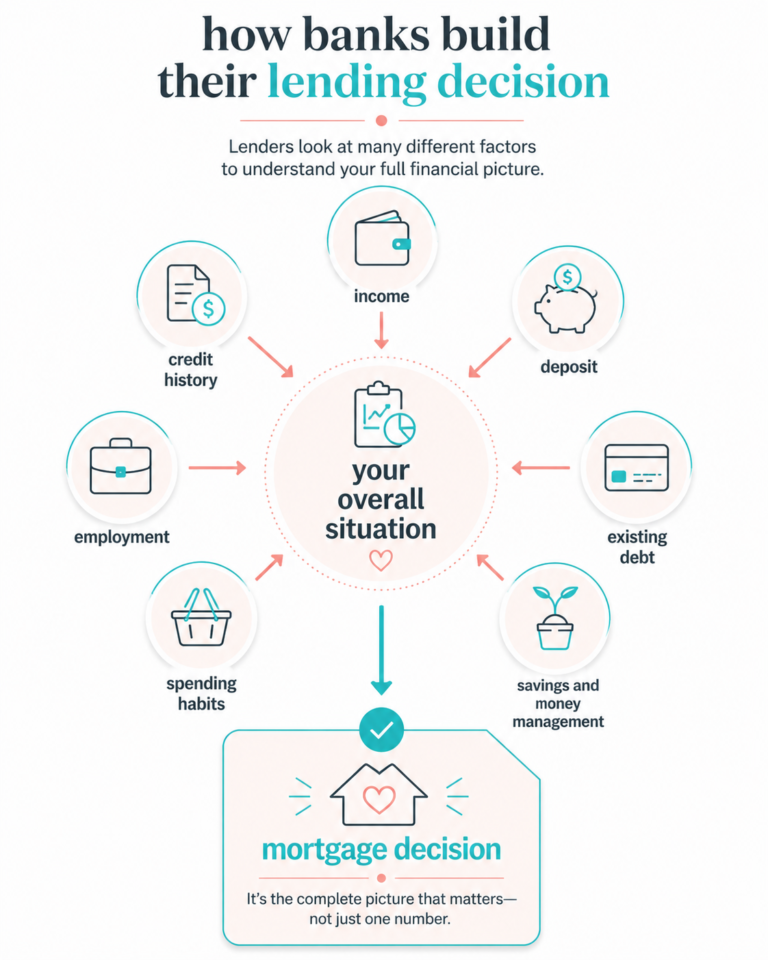
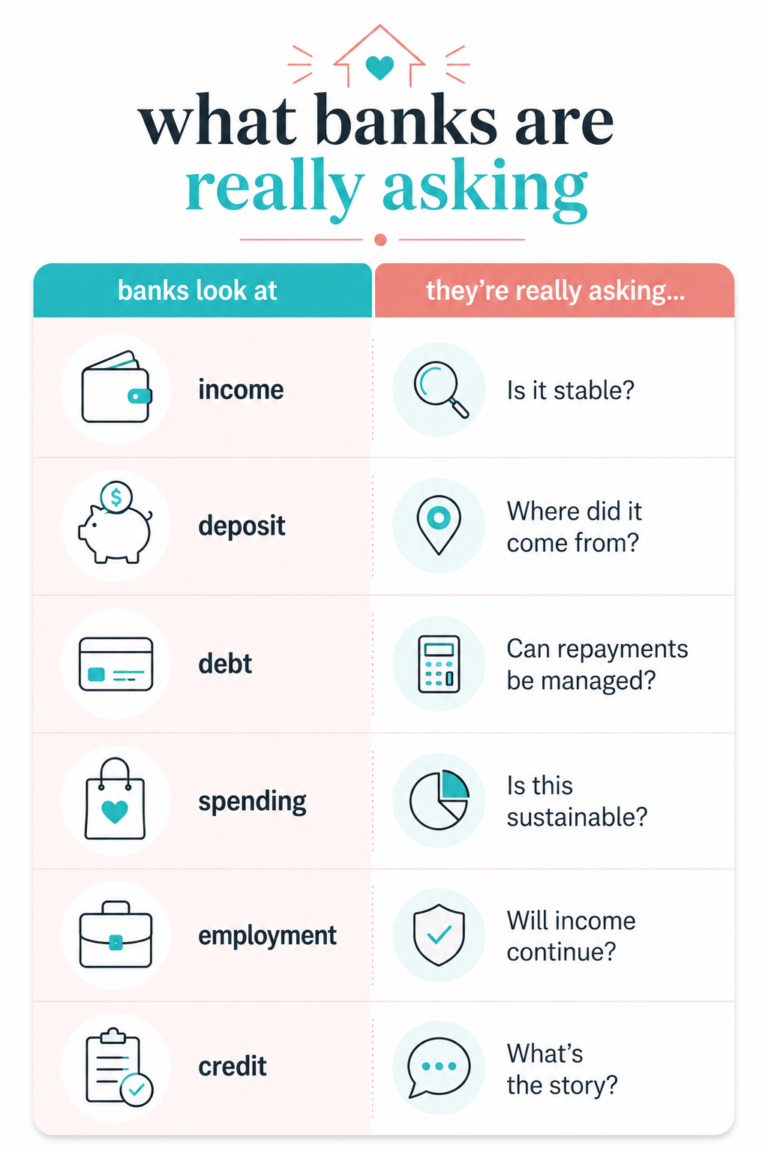
Your bank statements give lenders an insight into how you manage your money but what do banks look at when applying for a home loan?
They’ll generally look at your regular spending, existing financial commitments and whether your account conduct demonstrates that you can comfortably manage mortgage repayments.
Things worth paying attention to include:
Regular savings habits.
Keeping up with bills and payments.
Managing credit cards and other debt.
Avoiding excessive overdraft use.
Reducing unnecessary spending.
Buy now pay later commitments such as Afterpay.
Your bank statements don’t have to be perfect. Life happens, and lenders understand that people have different spending habits.
But if you’re regularly spending everything you earn, relying on overdrafts or juggling multiple debts, it might be worth making some changes before applying and seeing how BNPL can impact your application.
The good news? These are things you can work on.
Sometimes a few months of better financial habits can put you in a much stronger position.
4. Do you understand your income and borrowing position?
Your income is one of the biggest factors lenders consider when assessing a mortgage application.
But it’s not just about how much you earn. Lenders also look at how your income is structured and whether it’s consistent.
For example, you might be:
Working full-time or part-time.
Self-employed.
Receiving commission, bonuses or overtime.
Working casual or variable hours.
Changing jobs.
Planning to take maternity or parental leave.
Different lenders can assess different income types in different ways.
Your existing debt, living expenses, deposit and credit history will also affect how much you might be able to borrow.
This is where speaking with a mortgage adviser can make a real difference.
Rather than relying on an online calculator or guessing what the bank might say, you can get a better understanding of your actual borrowing position and what options might be available.
You might be closer than you think. Or you might discover a few things that need attention first.
Either way, it’s much better to know.
5. Do you have your documents organised?
You don’t need to have a mortgage application ready to go, but getting organised early can make things much easier.
Start gathering:
Photo identification.
Your latest payslips.
Your last three months of bank statements.
KiwiSaver first-home withdrawal eligibility information, if applicable.
Statements for any existing loans or credit cards.
Details of any gifted deposit or additional funds.
Having these documents handy makes it easier to review your financial position and means you’re not scrambling around when you find a property you love.
6. Have you thought about the costs beyond your deposit?
One mistake I see first-home buyers make is focusing so heavily on saving their deposit that they forget about the other costs involved in buying a home.
There are several additional expenses to consider, including:
Solicitor or conveyancing fees.
Building inspections.
LIM reports.
Valuations, if required.
Moving costs.
Initial repairs, furniture or household essentials.
These costs can add up, so it’s important to factor them into your savings target.
You also want to think about life after settlement. Rates, insurance, maintenance and unexpected repairs all become part of owning a home.
You don’t want to put yourself in a position where buying your first home leaves you with absolutely nothing in reserve.
7. Do you understand the buying process?
You don’t need to know everything about buying a house, but having a basic understanding of the process will help you feel more confident when the time comes.
It’s worth understanding:
What mortgage pre-approval is and when you need it.
How making an offer on a property works.
The difference between conditional and unconditional offers.
Why you might need a builder’s report or LIM.
What your lawyer does.
How finance and settlement timeframes work.
There are plenty of moving parts when buying your first home, and you don’t have to navigate them alone.
A good mortgage adviser will help explain the lending side of the process, answer your questions and guide you through the steps along the way.
What if I’m not mortgage ready yet?
This is probably the most important part of the conversation.
If you’ve read through the points above and realised there are a few things you need to work on, don’t be discouraged.
You haven’t failed a test. You’ve simply identified where you need to focus.
Perhaps you need to:
Build up your deposit a little further.
Reduce or clear some existing debt.
Close unused credit card or buy now pay later facilities.
Improve your bank statement conduct.
Establish a more consistent savings habit.
Understand how a new job or change in income affects your borrowing position.
The trick is not trying to fix everything at once.
You need to understand which changes will make the biggest difference to your ability to get a mortgage.
For example, spending six months saving an extra $2,000 might not be the best use of your time if an unused credit card limit or existing debt is having a bigger impact on your borrowing capacity.
This is where having a personalised plan can save you time and help you focus on what actually matters.
Real buyer story
Sometimes things come together quicker than you expect!
I recently helped a lovely couple buy their first home. They were motivated, organised and ready to take action, which made a huge difference.
Their situation was a little different, with only one of them working, family members who could board with them and a 5% deposit through Kāinga Ora’s First Home Loan scheme.
Initially, they thought they’d need to keep their budget quite low. But after working through their income, boarder arrangements and borrowing options, we were able to explore a higher price range.
This opened up the opportunity to buy a much nicer home that was already renovated and suited their family really well.
From our first conversation to settlement, everything moved quickly. They listened, took action and were an absolute pleasure to work with.
Last week, they settled on their first home!
A great reminder that buying your first home isn’t always about having a huge deposit or two incomes. It’s about understanding your options, having a plan and knowing what’s possible.
Congratulations to this lovely couple. I hope you enjoy making your new house a home!
And that’s the real value of getting advice early.
You don’t always need someone to tell you that you’re ready to buy. Sometimes you need someone to show you how to get there.
The biggest myths I hear
You need a 20% deposit.
You don't.
You need a six-figure income.
Not necessarily.
You need to pay off all debt first.
Again, not always.
One bad month means no.
Usually not.
Your own bank is your only option.
Definitely not.
Every lender has different policies, different risk appetites and different ways of assessing borrowers.
That’s exactly why good advice matters.
*Your first home faster action*
How can I become mortgage ready in the next 90 days?
Here’s a simple exercise I’d encourage you to try.
Think about these five areas and give yourself a score out of five for each one.
- Deposit – do I know where my deposit is coming from?
- Income – do I understand how my income will be assessed?
- Spending habits – are my finances in good shape?
- Documents – do I have the information needed for an application?
- Confidence – do I understand my borrowing position and next steps?
Don’t worry about your total score.
Instead, look at the area where you scored lowest and ask yourself:
What’s one thing I could improve in this area over the next 90 days?
Maybe it’s setting up an automatic savings payment, reducing a debt, getting your bank statements in better shape or simply booking a conversation with a mortgage adviser.
Knowing where your biggest opportunity is helps you spend your time and energy on the things that will make the most difference.
Buying your first home isn’t about ticking every box overnight. It’s about making steady progress.
A few questions I get asked all the time
How do I know if I'm financially ready to buy a house?
You should have a reasonable understanding of your income, expenses, existing debt and deposit. You also need to know what mortgage repayments you could comfortably afford. A mortgage adviser can help review your financial position, understand your borrowing capacity and identify anything you might need to work on before applying.
How much deposit do I need to buy my first home in NZ?
A 20% deposit is a common benchmark, but some first-home buyers may be able to purchase with less. Depending on your circumstances and lender criteria, options may be available with a 5% or 10% deposit. Your deposit could include savings, an eligible KiwiSaver first-home withdrawal or gifted funds from family.
Can I get pre-approved for a mortgage if I'm not quite ready to buy?
Not necessarily. Pre-approval generally requires you to meet the lender’s criteria at the time of application. If there are things that need attention first, it may be better to work on those before applying. However, you can still speak to a mortgage adviser and start understanding your borrowing position well before you’re ready to buy.
How long does it take to become mortgage ready?
It depends on your starting position. Some buyers might be ready to apply immediately, while others may need three, six or twelve months (or longer) to build their deposit, reduce debt or improve their financial position. Having a clear plan helps you focus on the changes that will make the biggest difference.
What do banks look at when assessing a first home loan?
Banks generally consider your income, employment, living expenses, existing debts, credit history, deposit and bank statements. They’ll also assess whether you can afford the proposed mortgage repayments under their lending criteria. Different lenders can have different policies, so your circumstances may be assessed differently depending on where you apply.
Should I pay off debt before buying my first home?
Paying down existing debt can improve your borrowing capacity because lenders factor your repayments and financial commitments into their affordability assessments. However, it’s important to consider the type of debt, the interest rate and how much savings you’ll have left afterwards. Sometimes reducing debt is more beneficial than putting every spare dollar towards your deposit.
Should I talk to a mortgage adviser before I have a deposit?
Absolutely. You don’t need to have your full deposit saved before speaking to a mortgage adviser. An early conversation can help you understand how much deposit you might need, whether KiwiSaver or gifted funds could help, how much you could potentially borrow and what steps to take next.
When should I talk to a mortgage adviser?
My advice? Earlier than you think.
You don’t need to have a 20% deposit, be actively looking at properties or be ready to make an offer before speaking to a mortgage adviser.
In fact, the earlier you have a conversation, the more time you have to understand your options and make any changes needed to put yourself in a stronger position.
I’ve spoken to plenty of people who assumed they were years away from buying, only to discover they were much closer than they realised.
I’ve also worked with people who needed a little more time, some guidance and a clear plan before they could apply.
Both are perfectly okay.
The important thing is understanding where you stand and knowing what needs to happen next.
Mortgage ready doesn’t mean perfect. It means prepared.
One of the biggest mindset shifts I try to create with first-home buyers is this:
Don’t ask whether you’re ready. Ask what’s stopping you from being ready.
Once we know that, we can build a plan to move you forward.
You don’t need to have all the answers. You don’t need to understand every lending rule or know exactly which bank will approve you.
That’s where I come in.
My job is to understand your situation, explain what’s possible and help you work towards buying your first home sooner.
Not sure where you stand?
Book a first home readiness review and let’s work it out together.
We’ll look at your income, deposit, spending habits and borrowing position, identify anything that might be holding you back and put a personalised plan in place to help you get closer to your first home.