In this article you’ll learn
Why banks consider your credit card limit, even when your balance is $0.
How reducing your credit limit could improve your borrowing power.
Why paying your credit card off in full doesn’t mean the limit is ignored.
What to consider before reducing or cancelling a credit card.
2-minute read
Could your credit card be costing you borrowing power?
You might have a credit card you barely use, pay off in full every month, or keep tucked away for emergencies.
Good news, right?
Well, there’s one little catch. Even if your credit card balance is $0, the limit could still be affecting how much you can borrow for your first home.
And this is one of the easiest things to review before applying for a mortgage.
It’s not just what you owe
When banks assess your home loan application, they don’t just look at your current debts. They also consider your potential commitments, including the credit available to you.
That means a credit card with a $15,000 limit can affect your borrowing power even if you haven’t used it in months.
Think of it this way: the bank needs to consider what you could spend, not just what you have spent.
And yes, that can still apply if you’re the sort of person who pays their credit card off in full every month.
Credit cards are just one piece of the puzzle. Find out more in my guide to will my debt stop me getting a mortgage in New Zealand?
So, how much difference can it make?
This is where things get interesting.
As a rough rule of thumb, every $1,000 reduction in your credit card limit could potentially increase your borrowing capacity by around $5,000 under some bank calculators.
That means reducing a $15,000 limit to $5,000 could potentially make a meaningful difference to what you can borrow.
These figures are illustrative, not a guarantee. The actual impact depends on your income, other debts, expenses and the lender’s assessment.
But when you’re trying to get your numbers across the line, it’s worth paying attention to the smaller details.
Credit card limits are just one of the things banks consider. Read my guide to what banks look at when assessing a home loan to understand the bigger picture.
Should you cancel your credit card?
Not necessarily!
The goal isn’t to cancel every card you own. It’s to make sure your credit limits suit your needs and aren’t unnecessarily holding you back.
Here are a few things worth considering:
Review your limits. Do you really need a $15,000 limit, or would a smaller one do the job?
Reduce limits as you pay off debt. If you’re paying down a card, consider whether you also need to keep the full limit available.
Consider whether you need a credit card at all. Debit cards offer plenty of useful features these days without giving you access to a revolving credit limit.
Get your repayment habits sorted. If you’re not paying your credit card off in full each month, work on reducing that balance and getting on top of the debt before taking on a mortgage.
One important thing: don’t make changes blindly. Sometimes reducing a limit is enough, while in other situations closing a card or keeping it open might make more sense.
It’s worth checking your options before making changes, particularly if you’re planning to apply for a mortgage soon.
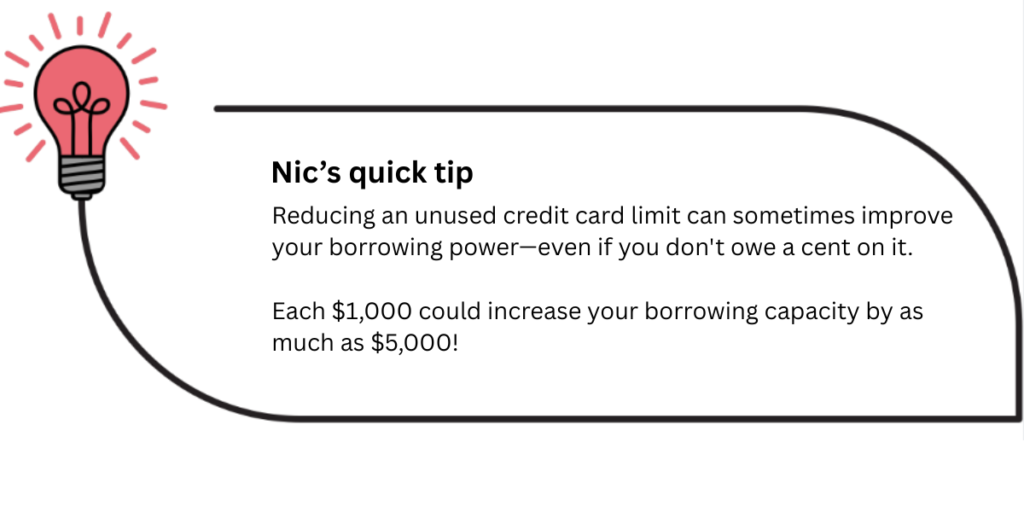
One of my favourite lightbulb moments with clients is explaining that their unused credit card could be affecting their borrowing power.
“But I don’t even use that card!”
Exactly. And that’s why it’s worth checking.
Before you apply for a mortgage, dig out your credit card statements and check every limit you have. You might find you’re paying for access to credit you don’t even need — and that access could be costing you borrowing power.
A small change won’t solve every borrowing challenge, but sometimes it’s one of the easiest wins available.
Wondering whether you’re closer to buying than you think? Read my guide to 5 signs you’re closer to buying your first home to see what progress might look like for you.


Real buyer story
I worked with a first-home buyer who was just shy of having enough borrowing power to purchase the home they wanted.
One of the things we reviewed was an unused credit card with a $3,000 limit. By paying off the card and closing it, we were able to improve their borrowing position just enough to get the purchase across the line.
It wasn’t a huge debt or a complicated strategy. Just a small change that made a real difference.
The takeaway? Sometimes, getting into your first home isn’t about earning more or saving another $10,000. It’s about understanding what could be holding you back and making the right changes.
*Your first home faster action*
Check your credit limits before you start house hunting.
Look at every credit card you have, including those you rarely use. Ask yourself whether you need the full limit or whether a lower limit would meet your needs.
Even if you pay your balance in full every month, the available limit could still affect how much a bank is prepared to lend you.
Don’t rush to cancel everything. Get a plan first, so you’re making changes that genuinely help your first-home goals
A few questions I get asked all the time
Can a credit card affect my mortgage application if I don't use it?
Yes. Banks may consider your available credit limit when assessing your ability to afford a mortgage, even if your credit card has a $0 balance. An unused card with a high limit could reduce your borrowing capacity quite significantly.
Does paying my credit card off in full improve my borrowing power?
Paying your balance in full is a good financial habit and can help demonstrate responsible money management. However, lenders may still factor in your credit limit when assessing affordability. Reducing the limit could help further.
How much does a credit card limit affect borrowing power in NZ?
The impact varies between lenders and depends on your income, expenses, other debts and overall application. As an illustration, a $1,000 reduction in your limit could potentially increase borrowing capacity by around $5,000 under some bank calculators. This isn’t a guaranteed outcome, so it’s worth checking your individual position.
Should I cancel my credit card before applying for a mortgage?
Not necessarily. Reducing the limit may be sufficient, and some people may have good reasons to keep their card. The best option depends on your circumstances and the lender’s requirements. Get advice before making changes.
Should I reduce my credit card limit as I pay off debt?
It’s worth reviewing your limit as your balance reduces. If you no longer need access to the full amount, lowering the limit may help with future borrowing capacity. However, prioritise paying down the debt and maintaining manageable spending habits.
Want to know whether your credit card limits are holding you back?
Get in touch. I’ll help you understand where you stand, what could improve your borrowing power, and which changes are worth making before you apply.
Because sometimes, getting closer to your first home isn’t about earning more. It’s about having a better plan.