In this article you’ll learn
How Buy Now Pay Later affects mortgage affordability.
Why paying off your balance may not be enough.
Why lenders may require accounts to be closed.
How to break the cycle and get mortgage-ready.
2-minute read
If you’re serious about buying your first home, it’s time to break up with Afterpay.
I see it all the time. People working hard to save a deposit, hoping to buy their first home, while still using Afterpay, Zip or other Buy Now Pay Later services to get through the week.
Here’s my take: it’s time to get out of the habit.
Yes, Buy Now Pay Later is often interest-free. But that doesn’t automatically make it a good financial decision, particularly when you’re working towards a home loan.
Why Buy Now Pay Later can hurt your mortgage application
When a bank assesses your mortgage application, it looks at your overall financial position, including your income, living expenses and existing financial commitments.
Those seemingly small repayments still count. And if you’re juggling multiple accounts, they can add up.
There’s another consideration, too. If you’re regularly relying on Buy Now Pay Later for everyday essentials, it may be a sign that your budget needs some attention.
You don’t want to be committing next week’s pay to purchases you’ve already made. That money could be going towards your savings, your bills or simply giving you more breathing room each payday.
If you’re carrying other debts as well, read my guide how debt can affect your mortgage application to understand what lenders look at and what you can do to improve your position
Paying it off isn't always enough
Clearing your Afterpay balance is a good start, but don’t assume that’s the end of it.
Depending on the lender and your circumstances, you may be required to close your Buy Now Pay Later accounts as part of your mortgage approval.
I’d much rather see you get ahead of this now than have it become another condition to sort out when you’re trying to buy a house.
Want to know what else lenders look for? Read my guide what banks look at when assessing a home loan, including your bank statements, spending habits and existing commitments
Let's get you out of the Afterpay rut
You don’t need to overhaul your entire life overnight.
Start with a few practical steps:
Stop adding to the balance. Avoid making new purchases you can’t comfortably pay for from money you already have.
Clear what you owe. Make a plan to pay off your outstanding balances without missing other essential payments.
Close the accounts. Once balances are cleared and any outstanding transactions are settled, close the facilities you no longer need and keep confirmation.
Set up a proper budget. Plan for bills, groceries, transport, unexpected costs and savings before deciding what you have left to spend.
Give yourself time. Build these habits well before applying for a mortgage, rather than trying to fix everything at the last minute.
And when those “sorry to see you go” emails arrive? Take it as a win. You’re taking control of your money and building habits that will serve you long after you get the keys to your first home.
The bank approved the mortgage — but there was a catch
Imagine getting your first-home loan approved, only to find one of the conditions is that you need to close your Afterpay account before settlement.
It’s something I see regularly. Lenders may require Buy Now Pay Later accounts to be closed as part of their approval conditions.
The balance might be paid off, and the repayments might seem small, but the bank still wants to see those facilities closed.
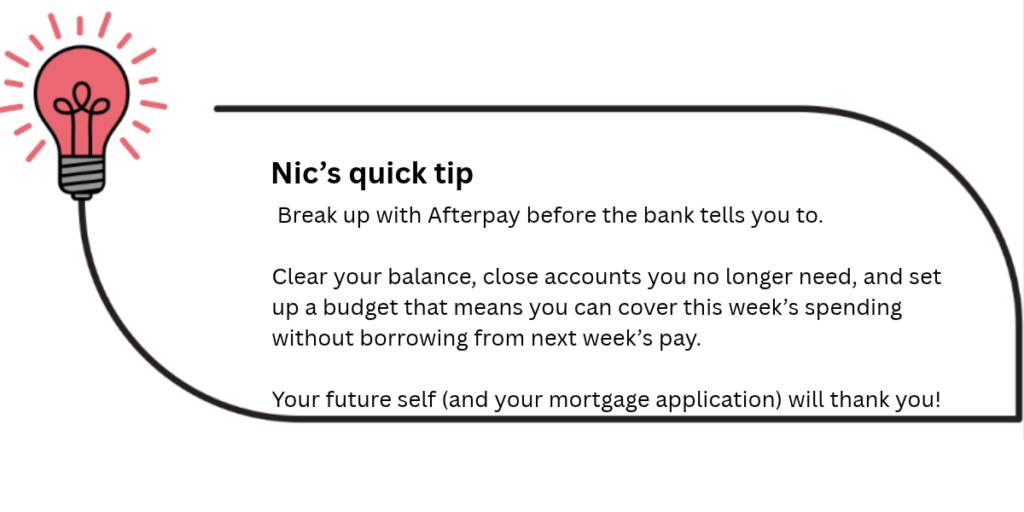
My advice? Don’t wait until you’re buying a house to make the change. Clear your balances, close the accounts you don’t need, and get into the habit of managing your money without relying on next week’s pay.
That way, you’re not scrambling to meet another condition when you should be focusing on getting the keys.
Think Afterpay won't affect your mortgage? Think again
"It’s interest-free, so it’s harmless."
FACT: Interest-free doesn't mean impact-free. You're still committing future income to purchases you've already made.
"I'll just pay it off before I apply."
FACT: Paying off your balance may not be enough. Your lender may also require you to close the account.
"I only use it for groceries and essentials."
FACT: If you're relying on next week's pay to cover this week's essentials, it's time to revisit your budget. You need a plan that works without Buy Now Pay Later.
*Your first home faster tip*
Stop borrowing from your future paycheques.
Every time you use Buy Now Pay Later, you’re committing money you haven’t received yet.
Start building a budget that lets you cover your spending, save consistently and still have money left to enjoy life.
A few questions I get asked all the time
Does Afterpay affect getting a mortgage in NZ?
It can. Lenders consider your overall financial commitments when assessing affordability, and Buy Now Pay Later repayments may reduce what you can borrow. Their policies and requirements vary.
Should I close Afterpay before applying for a mortgage?
It can be a sensible step if you no longer need the facility. Clear any outstanding balance and transactions first, then confirm the account is closed. Check your position with your mortgage adviser before making changes if you’re already in the application process.
Will closing Afterpay increase my borrowing power?
It may help, particularly if the repayments are affecting your assessed expenses or the lender requires the account to be closed. However, the impact depends on your overall finances and the lender’s assessment.
You don’t need to live like a hermit to buy a home. But you do need to know where your money is going.
If buying your first home is the goal, let’s get your finances working towards it.
Not sure where to start? Get in touch and let’s work out what you can do now to put yourself in a stronger position for a home loan.