In this article you’ll learn
What documents you’ll need when applying for a mortgage in New Zealand.
How to show evidence of your deposit, including KiwiSaver and gifted funds.
What information you’ll need about existing debts and financial commitments.
How to get organised with a simple First Home Documents folder.
5-minute read
Thinking about buying your first home? Here’s what you’ll need to get your mortgage application underway.
Let’s be honest. Nobody gets excited about paperwork.
But if buying your first home is on the agenda, getting your documents organised early is one of the easiest things you can do to make life easier when the time comes.
The good news? You probably have most of what you need already. It’s just a matter of knowing what to find, where to find it, and having it ready when your mortgage adviser asks.
And trust me, a little preparation now can save a lot of back and forth later!
Your mortgage application checklist
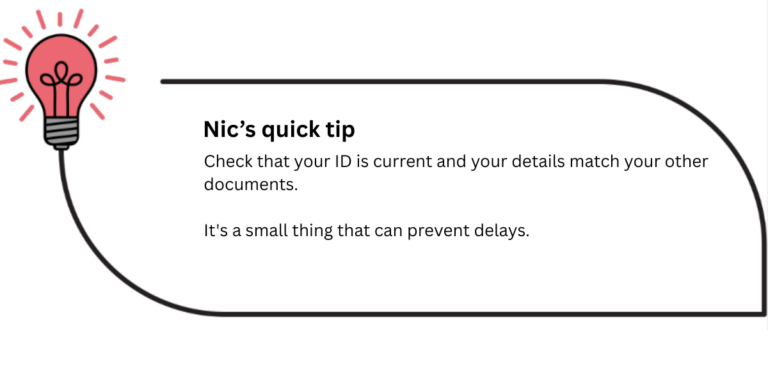
1. Proof of identity
Nothing too complicated here. Your lender needs to confirm your identity.
You’ll generally need:
Your passport or NZ driver’s licence.
Sometimes your birth certificate or visa (if applicable)
2. Proof of income
Your lender wants to understand how much you earn and how reliable that income is.
If you’re employed, start gathering:
Your latest payslips (usually your last 3).
Employment agreement, if requested.
Details of any regular bonuses, overtime or additional income.
Your IRD earnings summary for the last 12 months can help if applying for the Kainga Ora First Home Loan, or if your income is irregular.
Benefit income
Self-employed? You’ll generally need your latest two year;s financial statements and tax information.
If you receive commission, allowances, benefits, rental income or other income, let your adviser know. Different lenders treat different types of income differently.
3. Bank statements
This is where lenders get a better picture of your everyday finances.
Expect to provide recent statements for your everyday accounts, savings accounts and credit cards. Usually, this means the last three months, although requirements vary.
Your lender is looking at things like:
Your regular spending and living costs.
Existing debt repayments.
Buy Now Pay Later accounts.
Overdrafts and credit card limits.
How you’re managing your money.
There’s a bit more to bank statements than simply checking your account balance. Find out what banks actually look at when assessing your mortgage application.
4. Proof of deposit
You’ve worked hard to save that deposit, so let’s make sure we can show the lender where it’s coming from.
Depending on your situation, you might need:
Recent savings account statements.
Your KiwiSaver balance and eligibility confirmation.
Evidence of gifted funds, if applicable.
Evidence of investments or other assets being used.
A record of where any recent larger deposits have come from.
Using KiwiSaver? Your adviser can help you understand what evidence is needed and when to arrange your withdrawal.
5. Existing debt or lending statements
Your lender needs to understand your existing financial commitments.
This could include:
Personal loans and car finance.
Student loans.
Credit cards (including unused limits).
Overdrafts.
Buy Now Pay Later accounts.
Any other ongoing financial commitments.
You may need recent statements showing balances and repayments.
Not sure whether your debts will affect your chances of getting a mortgage? I’ve covered this in more detail in Will my debt stop me getting a mortgage in NZ?
Even an unused credit card can affect your borrowing capacity. Find out how your credit card limit could be holding you back.
6. Property documents
You won’t necessarily need these when first applying for pre-approval, but once you find a property, things move a little faster if you know what’s coming.
Depending on the property, your lender may ask for:
Sale and purchase agreement.
Property listing or details.
Registered valuation.
Building inspection report.
LIM report or other property information.
The documents required will depend on the property, the lender and the type of lending you’re applying for.
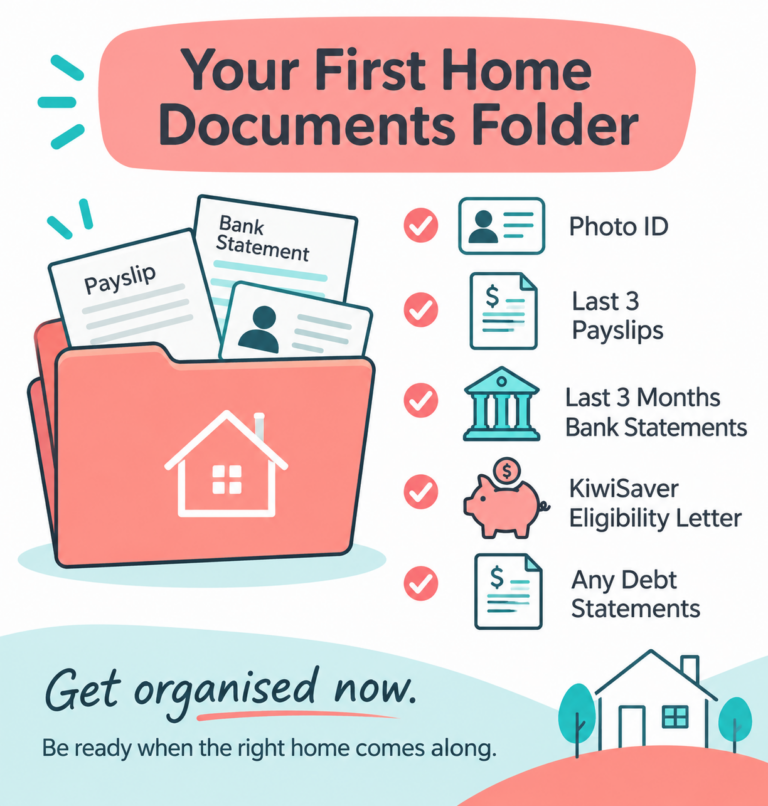
*Your first home faster action*
Want to get ahead? Start on your first home documents folder:
- Photo ID
- Your last 3 payslips
- Recent bank statements
- KiwiSaver eligibility letter
- Details of any existing loans or credit cards
Self-employed? Add your financial statements and tax information too.
You don’t need to have everything ready overnight. Just start building your folder.
A few questions I get asked all the time
What documents do I need to apply for a mortgage in New Zealand?
You’ll generally need proof of identity, income documents, recent bank statements, evidence of your deposit and details of any existing debts or financial commitments. If you’re buying a property, your lender may also request property-related documents.
How many months of bank statements do banks need for a mortgage?
Most lenders will ask for around three months of recent bank statements. This helps them understand your spending habits, regular commitments, savings and overall financial position. Requirements can vary between lenders.
Do I need to provide payslips for a mortgage application?
If you’re employed, lenders will generally ask for your latest two or three payslips to verify your income. They may also request your employment agreement or additional information if you receive bonuses, commission or other variable income.
What documents do I need if I'm self-employed?
Self-employed applicants will generally need recent financial statements, tax information and potentially additional business financial information. The exact requirements will depend on how your business is structured and which lender you’re applying with.
Do I need all my mortgage documents before applying for pre-approval?
No! You don’t need to have everything perfectly organised before speaking to a mortgage adviser. They can help you work out what’s needed for your particular situation and guide you through gathering the documents.
A little preparation goes a long way
Here’s something I tell clients all the time: the easiest mortgage applications aren’t necessarily the ones with the simplest finances. They’re often the ones where we’ve got everything organised upfront.
It means less time chasing paperwork, fewer last-minute surprises and more time focusing on getting you into your first home.
And remember, you don’t need to figure out all the paperwork yourself. That’s what I’m here for.
Every buyer’s situation is different, so I’ll give you a personalised checklist based on your income, deposit, debts and the type of property you’re looking to buy.
Want to get a little more prepared? You might also find these helpful:
Want to know what you’ll need for your mortgage application? Get in touch. Let’s get organised before you find the house.