
In this article you’ll learn
- What banks are really looking for when assessing a home loan
- The biggest myths that catch first-home buyers out
- Simple changes that could improve your borrowing position
- Why getting advice early can help you buy sooner
5-minute read
“I don’t think the bank will approve me…”
If I had a dollar for every time someone told me:
“I don’t think the bank will approve me…”
I’d probably have enough for a pretty decent house deposit.
Sometimes it’s because they don’t think they earn enough.
Sometimes it’s because they have a credit card.
Sometimes they’ve recently changed jobs, have a student loan, or spent a little too much over Christmas and assume they’ve ruined their chances.
The reality?
Most people are worrying about the wrong things.
Banks aren’t looking for perfect people. They’re trying to answer one simple question:
Can this person comfortably afford a home loan now, and are they likely to continue being able to afford it into the future?
Once you understand that, the whole process becomes far less intimidating.
It’s about the whole picture, not just one number
One of the biggest misconceptions I hear is:
“I just need to earn more….”
Sometimes that’s true.
But just as often, income isn’t the thing stopping someone from buying their first home.
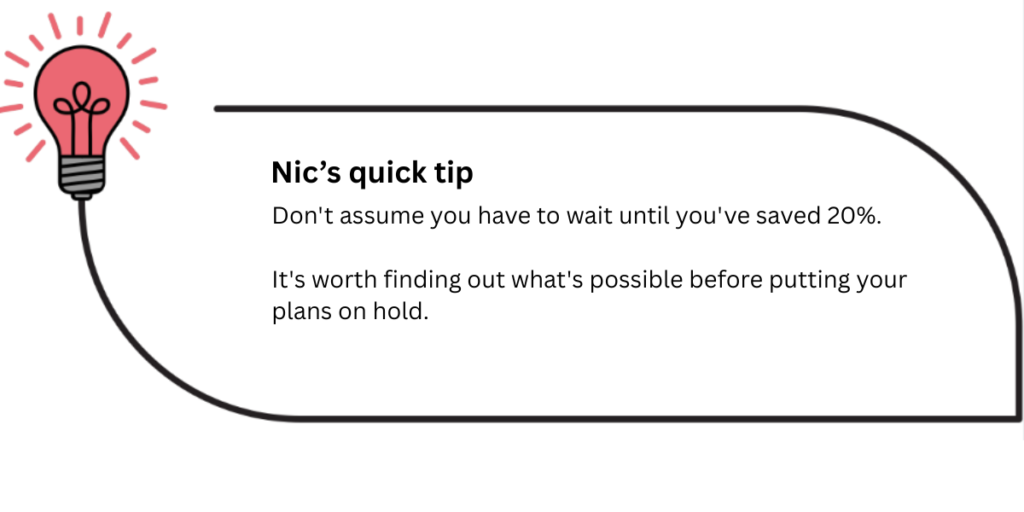
I’ve helped clients improve their borrowing position by reducing a credit card limit, paying off a small loan, adjusting spending habits, choosing a lender whose policy better suited their situation or simply presenting their application more effectively.
Most people don’t need a bigger income.
They need a better plan.
That’s why I encourage people to get advice early—even if buying a home is still six or twelve months away. Small changes made now can make a significant difference later.
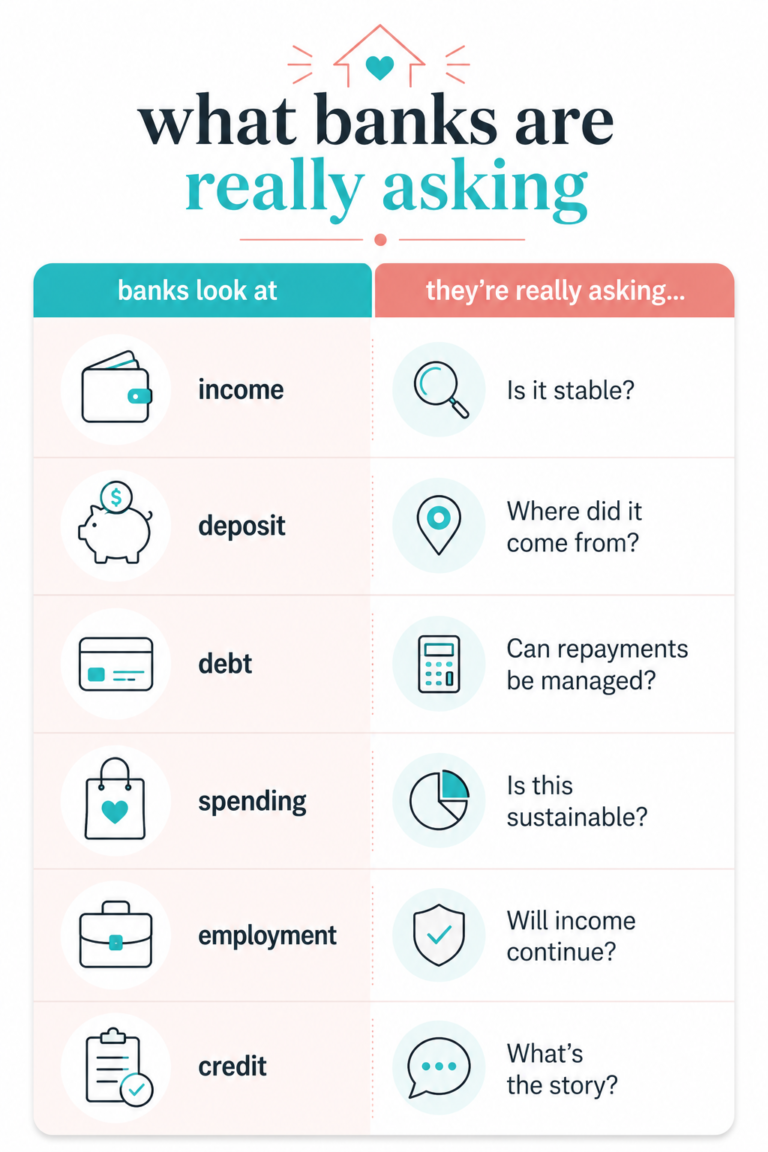
What banks actually look at
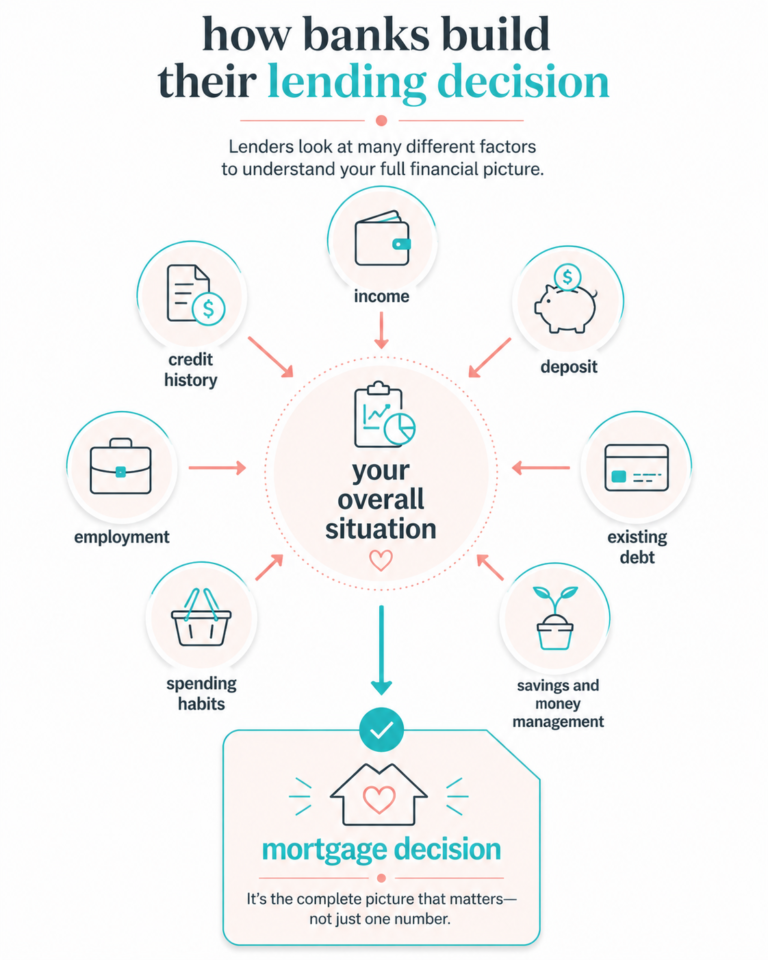
Every lender is different, but they’re all trying to build a picture of your financial situation. It’s about how all the pieces fit together—not just one number.
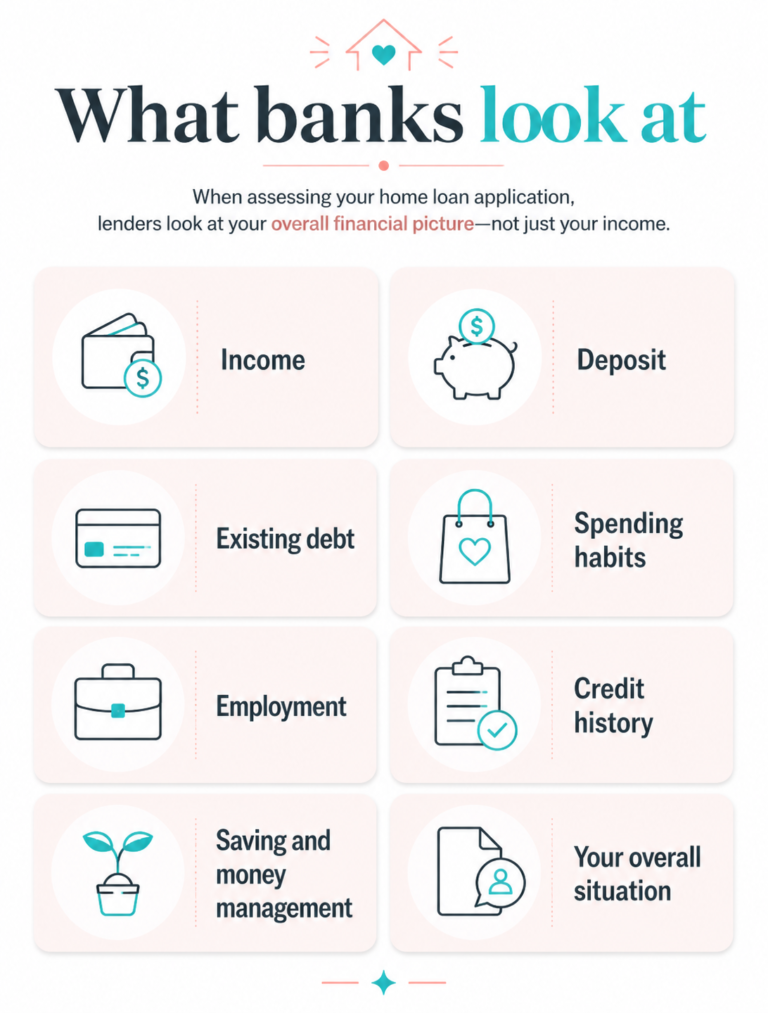
Let’s look at each one..
1. Your income
Yes, income matters.
But lenders aren’t just looking at how much you earn. They want to know whether your income is reliable, sustainable and likely to continue.
That includes things like:
- Are you permanently employed?
- Have you recently changed jobs?
- Are you self-employed or a contractor?
- Do you earn commission, bonuses or overtime?
- Is your income consistent?
2. Your deposit
Your deposit tells part of your story too.
Banks look at:
- Savings
- KiwiSaver
- Gifts from family
- Equity from another property
- Or a combination of these
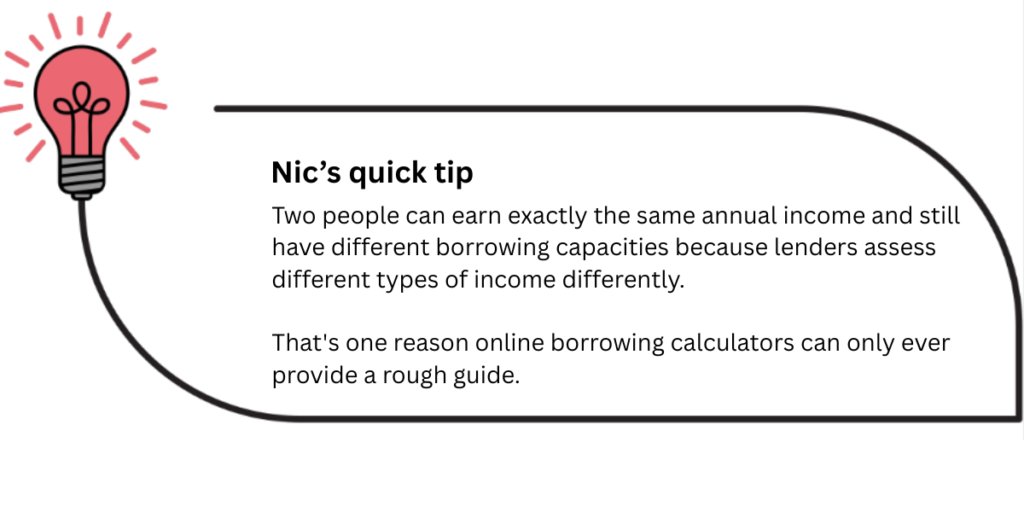
One of the biggest myths I hear is that everyone needs a 20% deposit before they can buy.
That’s simply not true.
Depending on your circumstances, there may be options available with a lower deposit.
3. Your existing debt
Having debt doesn’t automatically stop you buying a home.
Lenders simply want to know whether your repayments leave enough room to comfortably afford a mortgage.
They’ll consider things like:
- Student loans
- Car loans
- Personal loans
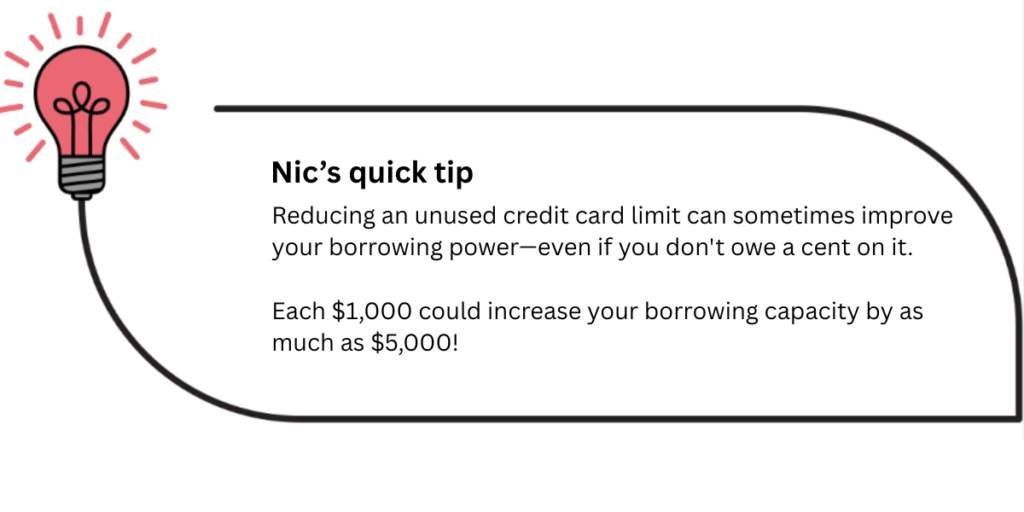
- Credit cards
- Buy Now Pay Later accounts
4. Your spending habits
Banks aren’t judging every coffee you buy.
They’re looking for patterns.
Can you manage your money consistently?
Are you regularly saving?
Are you living within your means?
They’re looking for consistency—not perfection.
5. Your financial behaviour
This is really about demonstrating that you’re ready for the responsibility of home ownership.
Things like paying bills on time, avoiding unnecessary overdrafts and regularly putting money aside all help build confidence.
One of my favourite indicators is seeing clients paying rent while also saving consistently every payday an amount that shows they could already meet the future housing costs.
That tells a really positive story.
6. Your employment
Changing jobs doesn’t automatically mean you can’t get a mortgage.
Neither does being on probation.
Lenders simply want to understand what’s changed and whether your income is likely to continue.
7. Your credit history
Your credit history is important—but it’s rarely the whole story.
If you’ve had missed payments or financial setbacks in the past, don’t automatically assume the answer is no.
Understanding what happened, how long ago it was, having a good explanation, and choosing the right lender can make a huge difference.
8. The story behind the application
This is probably the biggest thing people don’t realise.
Banks don’t lend money to spreadsheets.
They lend money to people.
Two applicants can have almost identical incomes, deposits and debts but receive different outcomes because one application clearly explains the bigger picture.
Perhaps someone’s income recently increased.
Perhaps they’ve paid down debt over the last six months.
Perhaps they’ve been living with family to save a larger deposit.
Or maybe they’ve demonstrated excellent savings habits while paying market rent.
Helping tell that story is one of the biggest reasons people choose to work with a mortgage adviser.

Real buyer story
I recently spoke with someone who had already convinced themselves they couldn’t buy a home.
They’d used an online borrowing calculator and estimated they could borrow around $350,000.
After looking at their full financial picture—not just their income—we discovered their borrowing capacity was actually closer to $550,000.
Nothing changed overnight.
They didn’t suddenly earn more.
They simply received advice based on how lenders actually assess applications, rather than relying on a generic calculator.
Without that conversation, they may have spent another year believing home ownership was out of reach.
The biggest myths I hear
You need a 20% deposit.
You don't.
You need a six-figure income.
Not necessarily.
You need to pay off all debt first.
Again, not always.
One bad month means no.
Usually not.
Your own bank is your only option.
Definitely not.
Every lender has different policies, different risk appetites and different ways of assessing borrowers.
That’s exactly why good advice matters.
*Your first home faster action*
Take fifteen minutes this week and make a simple list.
- Your income.
- Your savings.
- Your KiwiSaver balance.
- Your debts.
- Your credit card limits.
- Your regular expenses.
Now ask yourself one question.
If I were the bank, what questions would I ask about my financial position?
You don’t need to know all the answers.
But knowing the questions is the first step towards becoming mortgage ready.
A few questions I get asked all the time
What if my income includes commission or overtime?
Many lenders will consider it, but they may assess it differently depending on how long you’ve been receiving it and how consistent it is.
I don't have a 20% deposit. Should I wait?
Not necessarily. There may be options available depending on your circumstances.
Should I get a new car before buying a house?
I’d recommend talking to a mortgage adviser first. New lending can reduce your borrowing power, so it’s worth understanding the impact before making a decision.
Do my bank statements have to be perfect?
No. Lenders aren’t looking for perfection. They’re looking for responsible, consistent financial behaviour.
One of the things I enjoy most about my job is helping people realise they’re often much closer than they think.
Sometimes the answer is:
“You’re ready now.”
Sometimes it’s:
“Not quite—but here’s exactly what I’d work on over the next three to six months.”
Either way, you’ll leave with a plan.
And that’s what I want for every first-home buyer.
Don’t spend months trying to guess what a bank might think or relying solely on online calculators that only tell part of the story.
Lender policy changes regularly.
Every lender assesses applications a little differently.
And every buyer’s situation is unique.
The best advice I can give is simple.
Get advice.
A conversation about your specific situation can give you clarity, confidence and, in many cases, help you buy your first home sooner.
Choose your next step:
Read the
next article
5 signs you might be closer to buying your first home than you think

First Home Faster Toolkit
Step-by-step roadmap

Read the
Insider Guide
20 common questions answered

Book a
free chat
Let's work out what's possible


One Response