In this article you’ll learn
- Whether you really need a 20% deposit to buy your first home
- What 5%, 10%, 15% and 20% deposits could mean for you
- What lower-deposit options may be available
- The trade-offs buying with a smaller deposit
- Why getting advice early can help you buy sooner
8-minute read
Do you need a 20% deposit to buy your first home in NZ?
Waiting for a 20% deposit isn’t often the fastest path into your first home.
One of the biggest misconceptions I see among first-home buyers is that they need to save 20% before they can even start thinking seriously about buying.
They don’t.
And the numbers show just how common lower-deposit lending has become.
In January 2026, 51.8% of mortgages approved to first-home buyers were low-equity loans, meaning the lending was above 80% LVR. It was the first month this figure had exceeded 50% since the Reserve Bank began collecting the data in 2014.
So while 20% remains an important deposit milestone, it clearly isn’t the only way first-home buyers are getting into the market.
The important question is whether a lower-deposit option could work for you.
And your deposit isn’t the only thing that determines whether you’re ready to buy. In fact, you might be closer than you think.
So, do you really need a 20% deposit?
The short answer is no — not always.
Most lenders generally prefer a 20% deposit, but there are so many options and circumstances where lower-deposit lending is available.
For eligible first-home buyers, a Kāinga Ora First Home Loan can reduce the required deposit to 5%. Some lenders may also consider other low-deposit pathways, including lending at 90% or, in some circumstances, 95% LVR.
That doesn’t mean everyone with a 5% or 10% deposit will automatically be approved.
Your deposit is just one part of the picture.
What do banks look at? Your income, existing debts, spending, credit history, the property you’re buying and the lender’s own criteria all matter too.
The best deposit isn’t necessarily the biggest deposit you can save. It’s the deposit level that makes sense for your circumstances, your goals and your overall lending strategy.
Why does everyone think you need 20%?
There is a good reason this number gets talked about so much.
For a long time, 20% has been considered the standard deposit for a home loan. It’s also the point at which you generally have more lending options available and are no longer considered a low-equity borrower.
So it’s easy for the message to become:
“You need 20% to buy a house.”
But there’s an important difference between 20% being the standard and 20% being the minimum required in every situation.
They’re not the same thing.
I also see this come up regularly in the Kiwi First Home Buyers Facebook group.
Someone will post that they’ve bought their first home, and another person will comment with their deposit, income or purchase price.
Then someone else reads it and thinks:
“I’m nowhere near that. I guess I’m not ready.”
Or:
“I need to save another $80,000 before I can even talk to someone.”
And I think some of this belief is also a hangover from previous generations, when a 20% deposit was much more commonly the expectation.
The problem is that if you assume 20% is the minimum, you could spend years trying to reach a number that you may not actually need.
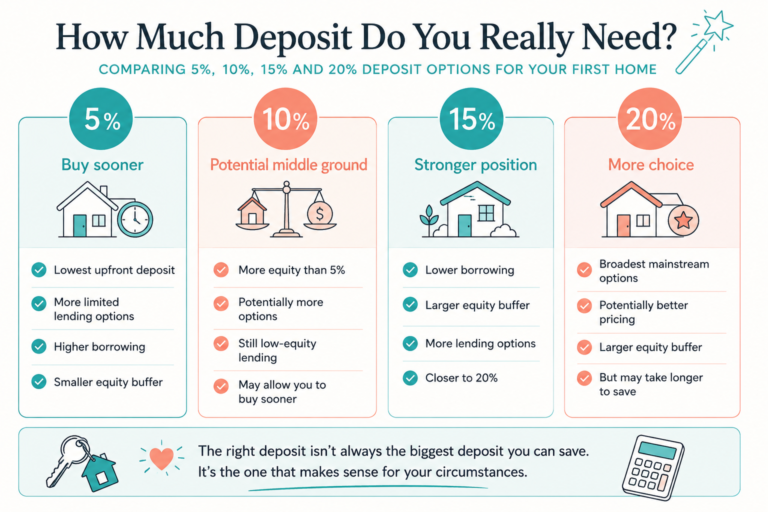
I’ve created a simple comparison below to show some of the potential trade-offs at each deposit level.
What if I only have a 5% deposit?
A 5% deposit doesn’t automatically mean you have only one option.
For eligible first-home buyers, the Kāinga Ora First Home Loan can be a great option to buy with a 5% deposit through participating lenders.
There is eligibility criteria to meet, and having a 5% deposit doesn’t mean you can automatically buy any property at any price.
But there can also be other pathways to buying with 5%, depending on your circumstances.
Some mainstream lenders may consider 5% deposit lending in specific situations. In some cases, these applications can’t be pre-approved in the traditional way, but that doesn’t mean you have to wait until you’ve found a property to understand whether your numbers could potentially work.
This is where getting advice early can be really valuable.
We can look at your income, deposit, debts, spending and overall position upfront, so you have a much clearer idea of whether a 5% pathway could potentially work for you before you start house hunting.
There are also shared ownership options, where you may purchase a home alongside another party, reducing the amount you need to borrow yourself. These arrangements have their own eligibility requirements and considerations, so they need to be assessed on a case-by-case basis.
So if you’re sitting there thinking:
“I’ve only got 5%. There’s no point talking to anyone until I have 20%.”
I’d challenge that assumption.
There may be more options available to you than you realise.
The important thing is to understand your options early, rather than spending years saving towards a deposit you may not actually need.
What about buying with a 10% or 15% deposit?
A 10% or 15% deposit can put you in a stronger position than 5%, while potentially allowing you to buy well before reaching 20%.
But lender policies vary, and low-deposit lending isn’t available on every application or every property.
This is why getting advice early can be valuable.
You don’t necessarily need to know which lender will work for you before you have the conversation.
That’s part of what the advice is for.
What are the trade-offs of buying with a lower deposit?
A lower deposit can mean buying sooner, but there are trade-offs.
The smaller your deposit, the more you’re borrowing relative to the value of the property. This can mean fewer lender options, higher interest rates or low-equity margins, and a smaller equity buffer if property values fall.
A 20% deposit generally gives you more lending choice and can mean better pricing.
But if reaching 20% could take several years, it’s worth considering what waiting could cost you too.
For some buyers, a 10% or 15% deposit may be a sensible middle ground. You get into your home sooner while still starting with a reasonable amount of equity.
And there’s another important consideration that first-home buyers sometimes overlook:
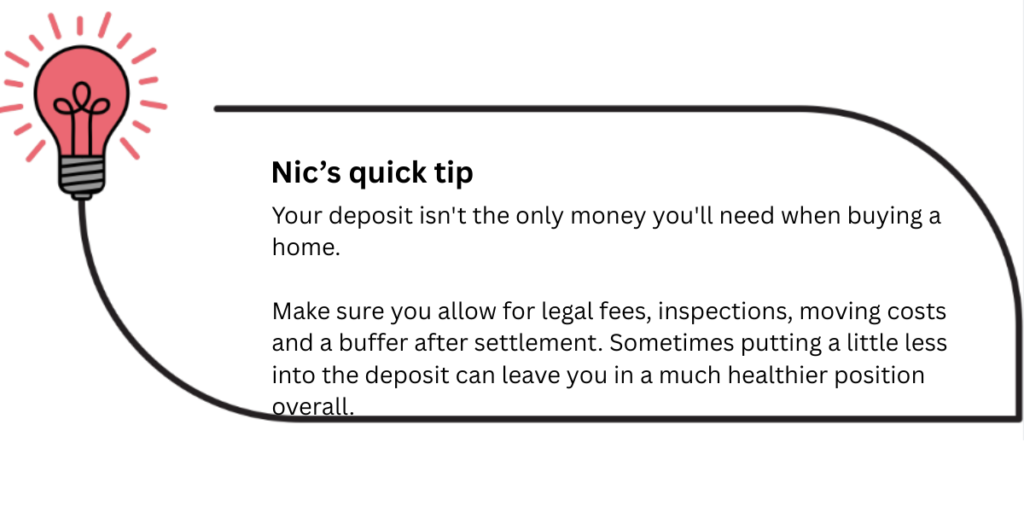
Don’t assume every dollar you have should go into the deposit.
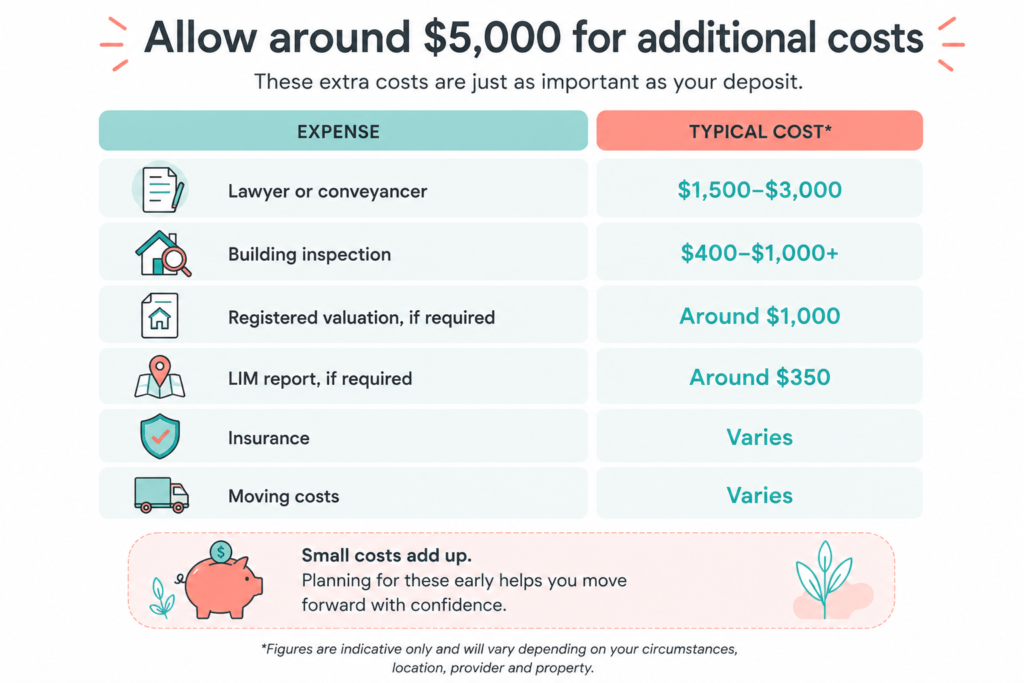
Don't forget the cash you need beyond your deposit
If you have $70,000 available, it doesn’t necessarily mean you should put every dollar into your deposit.
You’ll need to allow for other costs associated with buying, such as legal fees, building and property inspections, valuation costs where required, moving costs and potentially other expenses.
Having some cash left over after settlement can also give you a valuable buffer.
But shouldn’t I just keep saving until I reach 20%?
This is where I think first-home buyers need to look at the bigger picture.
If house prices and your savings are moving at different speeds, simply saying “I’ll wait until I have 20%” can sometimes mean the goal keeps moving further away.
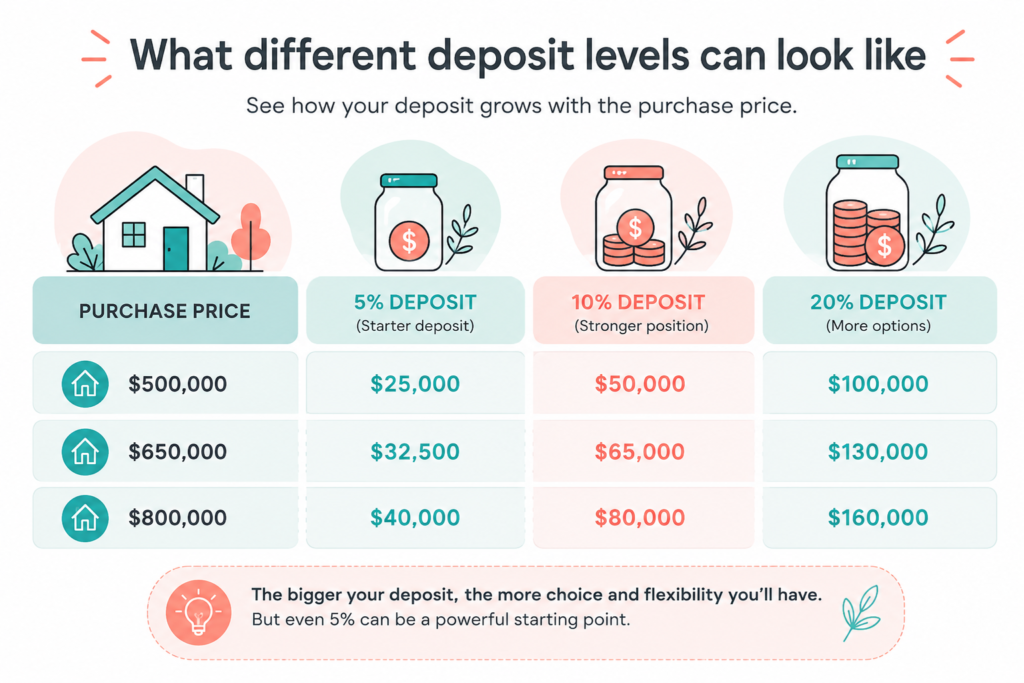
For example, if you’re looking at a $700,000 home, a 20% deposit is $140,000.
If you have $70,000 today, you’re already at 10%.
The question becomes whether waiting to save the additional $70,000 is the best strategy for you.
Maybe it is.
If you’re likely to reach 20% relatively quickly, waiting could give you more lender choice, potentially better pricing and a larger equity buffer.
But if it could take several years, the answer may be different.
You need to compare the cost of waiting with the cost of buying sooner.
Those are two very different things.
And sometimes buying sooner means that your future savings can start building equity in your own home rather than sitting on the sidelines waiting for the perfect deposit percentage.
That doesn’t mean everyone should rush out and buy with the smallest deposit possible.
It means you should understand your options before deciding that waiting is your only choice.
Don’t let the 20% target become the only goal
I see first-home buyers make a few common mistakes when it comes to deposits.
One is waiting until they have 20% before getting advice.
You don’t need to have everything figured out before speaking to a mortgage adviser. In fact, I’d much rather speak to someone early and help them understand their options than have them spend another two years saving because they assumed they weren’t ready.
Another is trying to outsave the market.
Saving more is important. But if you’re spending years trying to reach a particular deposit percentage while property prices are also changing, the finish line can keep moving.
And finally, don’t get too caught up comparing your journey with someone else’s.
Someone else’s deposit, income, purchase price and lending outcome don’t tell you what is possible for you.
Your first-home journey needs to be based on your numbers.
The question isn’t “Do I have 20%?”
I’d encourage you to change the question.
Instead of asking:
“Do I have enough deposit to buy?”
Ask:
“What would I need to do to be in a position to buy?”
That’s a much more useful question.
Because even if you’re not ready today, you might be closer than you think.
And if you’re not ready, that’s okay too.
The earlier you understand what’s holding you back, the earlier you can start working on the things that could actually move the needle
Real buyer story
A couple I recently helped in Upper Hutt came to me with a 5% deposit and thought they were still around 7–8 months away from being ready to buy.
They were looking at new builds and, because their income was above the Kāinga Ora First Home Loan threshold, we were exploring other options. We identified ANZ’s Blueprint to Build package, which could give them access to discounted lending for new build properties if they could reach a 10% deposit.
They were already saving well, but their money was spread across several investment accounts. I suggested simplifying things and focusing on one clear deposit balance, making it easier to track their progress and stay focused on one target.
Then they found a property they loved.
It was a $720,000 new build, and they were able to get their deposit up to $72,000 — 10% — much sooner than they expected. We negotiated with the developer and worked through the due diligence, including a building report, which I recommended even though it was a new build.
Their final lending was around $652,000, with a small portion structured to help them build towards 15% equity faster.
They had thought they needed another 7–8 months of saving before they could buy.
Instead, by having a clear plan and identifying the right lender and property, they were able to buy sooner.
The right lender can make a difference. But so does having the right plan.
*Your first home faster action*
Take 10 minutes today and work out your current deposit position.
Add together:
- Your savings.
- Your KiwiSaver balance.
- Any gifted funds that might be available
- Other funds that could potentially contribute towards your purchase (investments etc)
Then look at that number against a realistic purchase price.
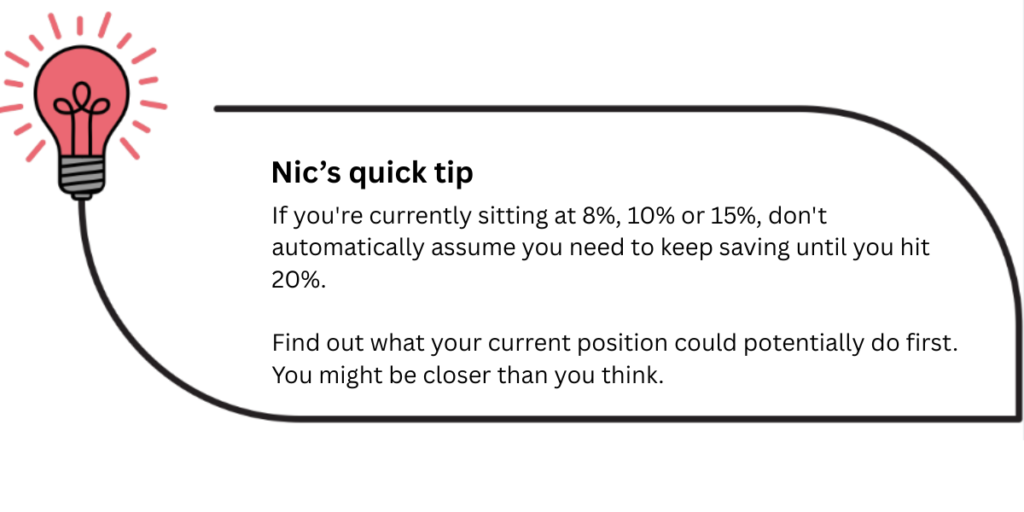
Don’t worry yet about whether it’s 5%, 10%, 15% or 20%.
Just find out where you actually stand.
You can’t create a plan from a number you don’t know.
And if you’re not ready to buy yet, that’s not a failure.
It simply means we need to work out what your next step is.
A few questions I get asked all the time
Can first-home buyers buy with a 5% deposit?
Potentially. Eligible first-home buyers can use the Kāinga Ora First Home Loan, which can reduce the required deposit to 5% through participating lenders. There may also be other 5% deposit pathways depending on your circumstances.
Can I buy my first home with a 10% deposit?
Potentially, yes. Some lenders may consider lending with a 10% deposit, depending on their criteria, your financial position, the property and current lending conditions.
I don't have a 20% deposit. Should I wait before speaking with a mortgage adviser?
No. I’d actually recommend speaking to an adviser earlier.
Knowing where you stand can help you understand whether you’re ready now, what could improve your position, and what you should focus on next.
That’s much more useful than simply guessing.
Is a 20% deposit better?
A 20% deposit can give you access to more lending options and potentially better pricing. But that doesn’t automatically mean waiting until you reach 20% is the best strategy for you.
Should I use every dollar I have as my deposit?
You also need to consider the costs of buying and whether you’ll have enough cash left over for a sensible buffer after settlement.
You don’t need to have it all figured out
Every first-home buyer’s journey is different.
Some people walk in with 20% and a straightforward application.
Others buy with a smaller deposit, need to work around non-standard income, have a KiwiSaver-heavy deposit, or need a little more planning before they’re ready.
There isn’t one “right” way to buy your first home.
The aim isn’t simply to save as much as possible and hope you eventually reach 20%.
The aim is to have a plan that gets you into the right home, at the right time, with lending that makes sense for your circumstances.
If you’re not ready today, that’s okay.
You don’t need to wait until you’re “ready” to find out what ready could look like.
Want to know where you stand?
Download my First Home Faster Toolkit for practical guidance through the home-buying process, or check out my First Home Buyers FAQ for answers to some of the questions I hear most often.
And if you’d like to know what your own pathway could look like, you can book a First Home Readiness Review with me.
We can look at where you are now, what’s working in your favour, what might be holding you back and, most importantly, what your next step should be.
Don’t let the assumption that you need 20% be the reason you delay your first home.