In this article you’ll learn
- The five signs you may already be closer to buying than you realise
- Why comparing yourself to other buyers can hold you back
- The common mistakes that delay first-home buyers unnecessarily
- What you can do next to move closer to home ownership
5-minute read
Every week I see the same question…
Every week in the Kiwi First Home Buyers Facebook group I see someone post a snapshot of their finances and ask:
“Do you think I’m close?”
They’ll list their income, savings, KiwiSaver balance and debts, then wait while hundreds of strangers offer completely different opinions.
Some tell them they need another $100,000 deposit.
Others tell them they’ll be fine.
Some say their income isn’t high enough.
Others insist the bank will approve them tomorrow.
The truth?
Nobody can accurately answer that question from a Facebook post.
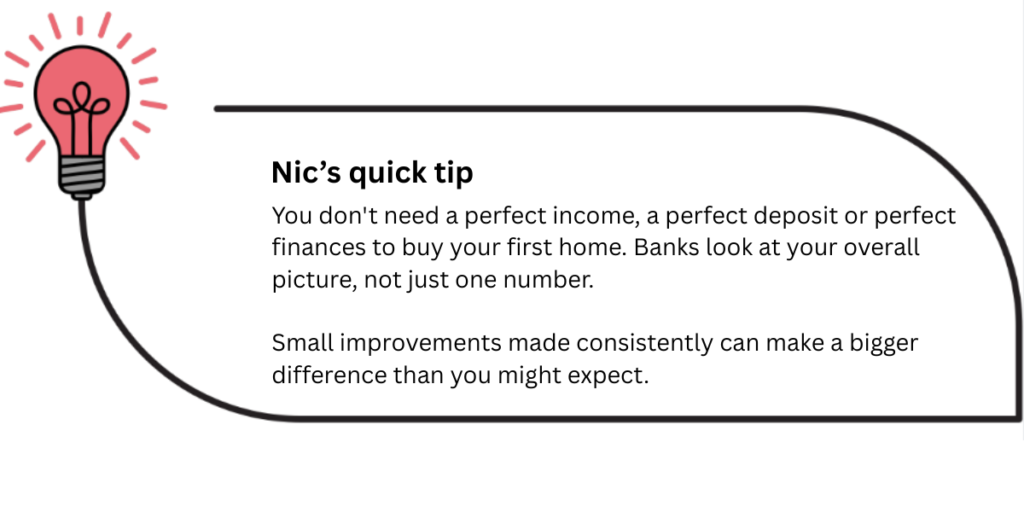
Buying your first home isn’t about one number. It’s about how your income, deposit, spending, debts and the lender’s policy all fit together.
What I can tell you is this…
Many of the people I speak to are much closer than they realise.
The short answer
If you’re wondering whether you’re close to buying your first home, you may already have more of the foundations in place than you think.
The biggest mistake I see isn’t people who aren’t ready.
It’s people who assume they aren’t.
Sometimes the answer is, “Yes—you could start looking now.”
Other times it’s, “Not quite yet—but here’s exactly what to work on over the next six months.”
Either way, you leave knowing where you stand instead of wondering.
Why this matters
One of the biggest reasons people delay buying is because they’re making decisions based on someone else’s experience.
A friend needed a 20% deposit.
A workmate was declined by their bank.
Someone on Facebook said your income wasn’t enough.
Your parents bought under completely different lending rules.
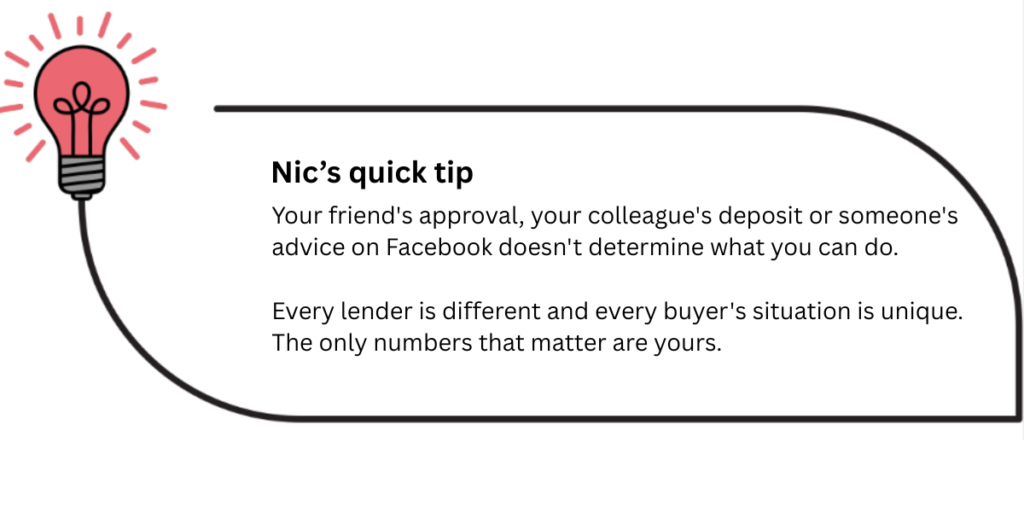
None of those situations necessarily apply to you.
Every lender has different policies.
Every buyer has different circumstances.
The only opinion that really matters is how your own situation stacks up today.
What I see every week
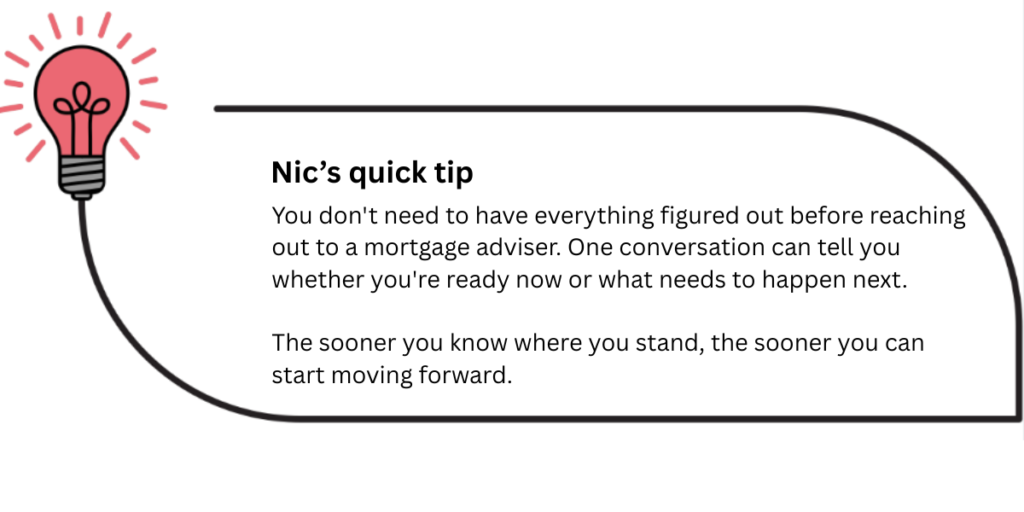
One thing I notice almost every day is people ruling themselves out before they’ve even spoken to a mortgage adviser.
Sometimes they’re right—they need another few months to save or tidy up their finances.
But just as often, they’re pleasantly surprised to discover they’re already in a position to start house hunting.
And even when they’re not ready today, our first conversation usually gives them a clear roadmap.
Instead of wondering what to do next, they know exactly what to focus on.
That certainty is often what turns “maybe one day” into a realistic plan.
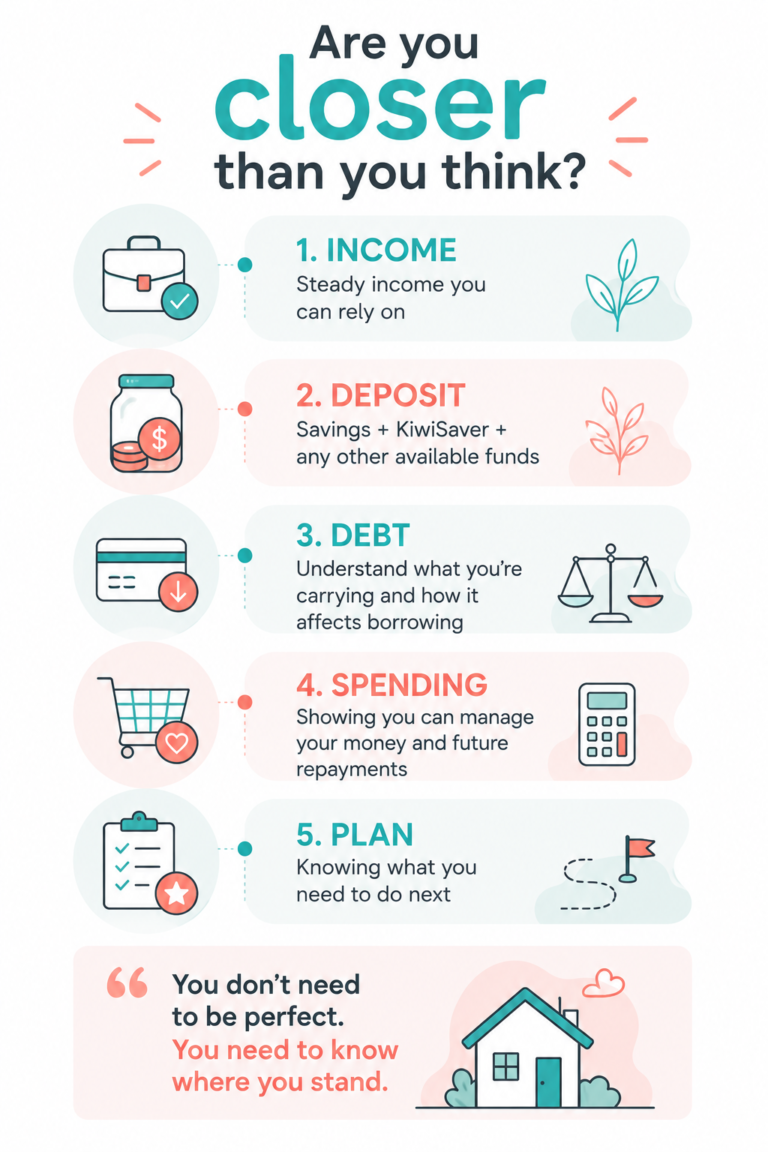
5 signs you might be closer than you think
Let’s look at each one..
1. You have a steady income
One of the biggest misconceptions is that you need to earn a huge salary before a bank will consider you.
In reality, consistency is often more important than earning the highest income.
If you’ve been working steadily, have reliable income and can comfortably manage your current commitments, you may already have one of the biggest pieces of the puzzle.
Permanent employment can make things simpler, but that doesn’t mean casual workers, contractors or self-employed buyers can’t get approved.
Every situation is different.
Remember: most people don’t need a higher income—they need a better plan.
2. Your deposit is growing
Your deposit doesn’t have to come entirely from savings.
Many first-home buyers build their deposit using a combination of:
- Regular savings
- KiwiSaver
- Gifted funds from family
- Equity support in some situations
Another common myth is that you always need a 20% deposit.
Many buyers purchase with less than this, depending on the lender and their circumstances.
Progress matters.
If you’re consistently growing your deposit, you’re already moving in the right direction.
3. You’re already thinking like a homeowner
Buying your first home starts long before you submit an offer.
If you’re already:
- saving regularly
- comparing properties
- looking at mortgage repayments
- reviewing your spending
- thinking about what you can comfortably afford
you’re already building the habits that banks like to see.
These small behaviours often matter more than people realise.
4. You’ve realised there are more options than your own bank
One of the biggest surprises for first-home buyers is discovering that every lender looks at applications differently. One bank may decline an application that another is happy to approve.Different lenders can have different approaches to:
- low-deposit lending
- self-employed income
- overtime and bonuses
- boarder income
- gifted deposits
- existing debts
5. You have a plan—even if you’re not buying tomorrow
Not everyone reading this will be buying in the next few weeks.
And that’s completely okay.
Having a clear roadmap is progress.
Knowing:
- how much deposit you’re aiming for
- what debts to reduce
- what documents you’ll need
- how much you can comfortably borrow
- when to start your pre-approval process
puts you in a much stronger position than simply waiting and hoping.
Buying your first home becomes much less overwhelming when you know your next step.
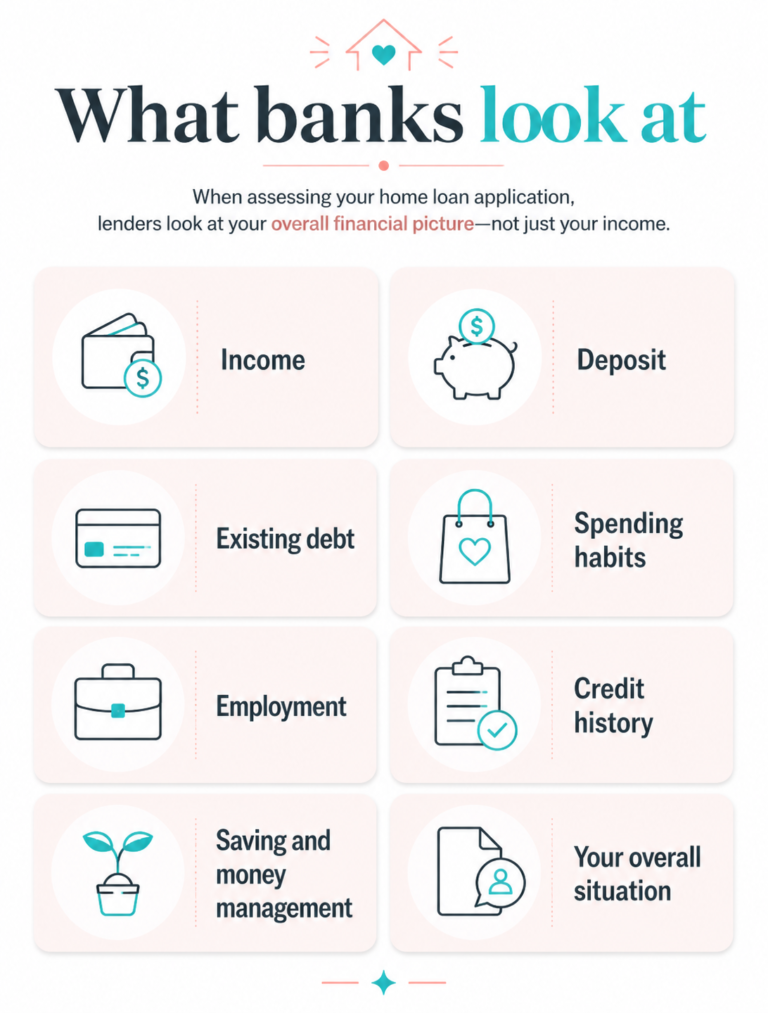
Before you decide whether you’re ready, it helps to understand what the bank is actually looking at.
What could be holding you back?
Sometimes there really is one thing standing between you and buying your first home.
It could be:
- spending habits that need tightening up
- recent credit issues
- too much consumer debt
- not enough genuine savings
- changing jobs at the wrong time
- not having enough self-employed history
The encouraging part?
Most of these aren’t permanent roadblocks.
Once you know what’s holding you back, you can work towards fixing it.
That’s why having a personalised plan is so valuable.
Common mistakes first-home buyers make
The most common mistakes I see are:
- Waiting until they’ve saved a 20% deposit before asking for advice.
- Assuming their own bank is their only option.
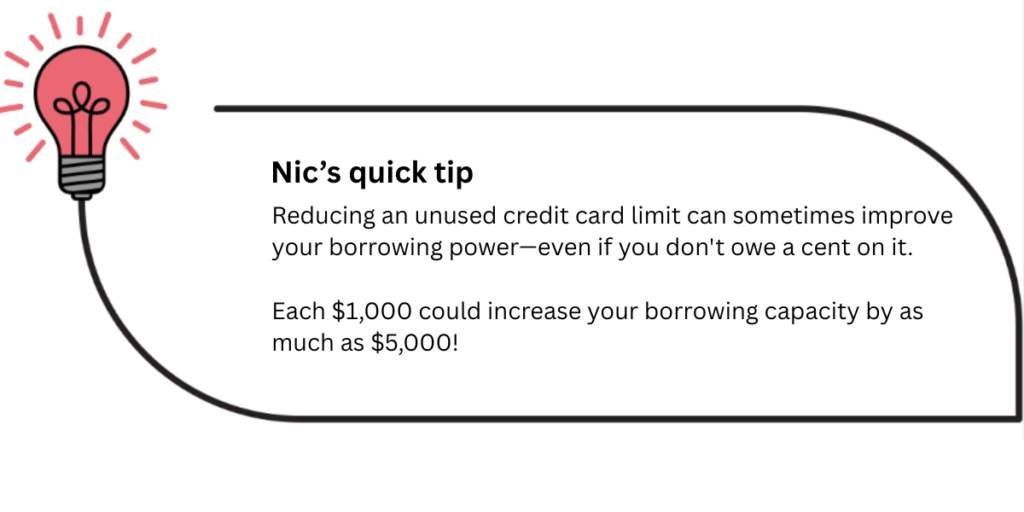
- Paying off the wrong debt first, instead of the debt that improves borrowing capacity the most.
- Comparing themselves to someone else’s situation.
- Waiting because they think they don’t earn enough.
Many of these mistakes can delay buying by months—or even years—when a simple conversation could have pointed them in the right direction much sooner.

Real client story
One client came to me convinced she wasn’t anywhere near ready to buy.
She’d been comparing herself to friends who already owned homes and assumed she needed to save for another year.
After reviewing her situation, we created a simple action plan.
- Pay off one small debt.
- Increase her regular savings so she could show payments would be manageable for her.
- Organise her documents.
- Find a boarder who would be willing to move in with her.
Instead of wondering whether buying was possible, she knew exactly what she needed to do.
A few months later, she was ready to submit her pre-approval application—and before long, she was searching for her first home with confidence.
Sometimes people don’t need more time.
They simply need a clearer roadmap.
5 things I wish more first-home buyers knew
20% deposit?
Most purchasers buy with less.
Huge income?
Not necessarily.
Debt-free first?
Not always.
Perfect finances?
Nope.
Your own bank?
Not your only option.
Every lender has different policies, different risk appetites and different ways of assessing borrowers.
That’s exactly why good advice matters.
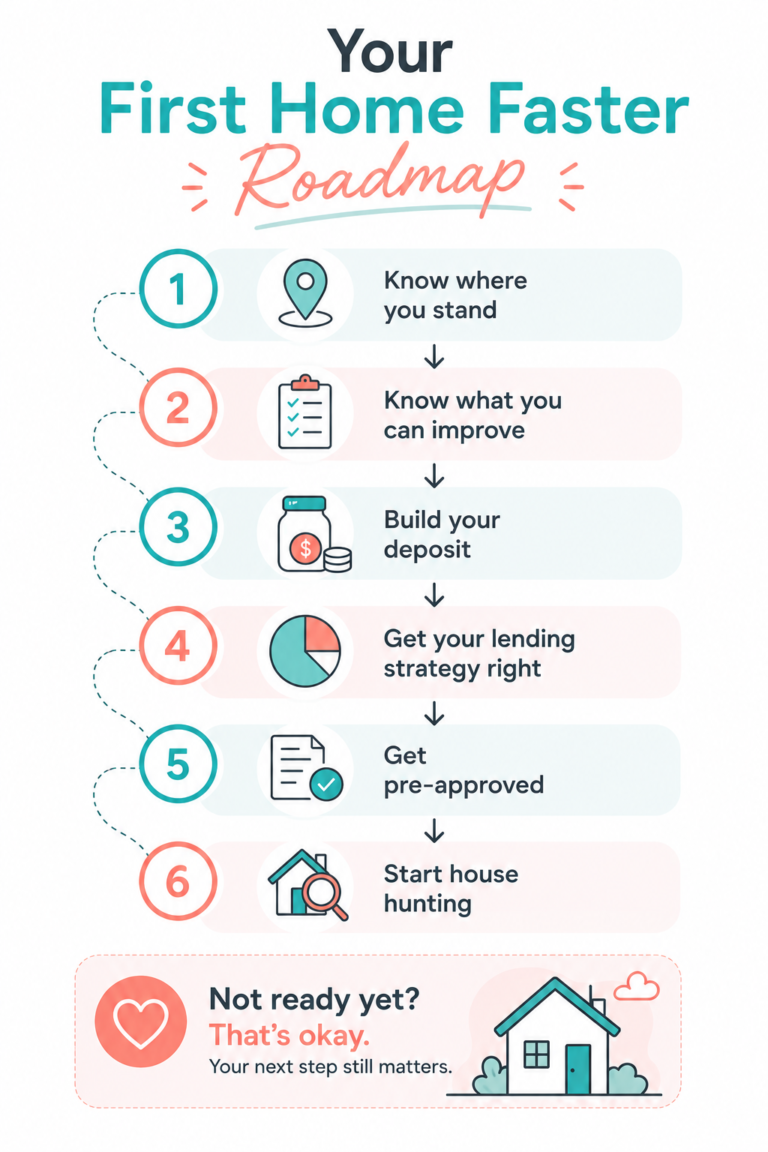
*Your first home faster action*
Before you close this page, ask yourself these five questions:
- Do I know roughly how much I could borrow?
- Do I know how much deposit I actually need?
- Do I know which debts are helping or hurting my borrowing capacity?
- Do I know which lender is likely to suit my situation best?
- Do I have a clear plan for my next step?
If you answered “No” to any of these, that’s completely normal—and it’s exactly where a mortgage adviser can help.
A few questions I get asked all the time
How do I know if I'm ready to buy my first home?
The best way is to have your situation reviewed by a mortgage adviser. They’ll assess your income, deposit, debts and overall position to determine whether you’re ready now or what steps will help you get there sooner.
Can I buy with less than a 20% deposit?
Yes. Many first-home buyers purchase with a deposit below 20%, although lending criteria vary between lenders and your individual circumstances.
Can I still buy if I have debt?
Often, yes. The type of debt, the repayment amount and your overall financial position all play a part. Sometimes reducing or restructuring debt can significantly improve your borrowing position.
Should I speak to a mortgage adviser before looking at houses?
Absolutely. Understanding your budget before you fall in love with a property can save a lot of stress and disappointment.
How much income do I need?
There isn’t a single number. Banks assess your income alongside your expenses, deposit, debts and the property you’re buying. Two people earning the same income can have very different borrowing capacities.
Ready to find out where you stand?
If you’re wondering whether you’re close to buying your first home, let’s take the guesswork out of it.
Whether you’re ready today or still have a few things to work on, you’ll leave with a personalised plan and a clear understanding of your next steps.
Because buying your first home isn’t about being perfect.
It’s about knowing where you stand—and having the right plan to get there sooner.
Choose your next step:

Book a
free chat
Let's work out what's possible
Read the
next article
What do banks look for when approving a home loan?

First Home Faster Toolkit
Step-by-step roadmap
Read the
Insider Guide
20 common questions answered
One Response