In this article you’ll learn
- Why having debt doesn’t automatically stop you getting a mortgage
- Which types of debt can have the biggest impact on your borrowing power
- Why credit card limits matter, even if you pay the balance in full
- How Buy Now Pay Later and other small commitments can add up
- When paying off debt could improve your borrowing position
- Why the right debt strategy depends on your income, deposit and buying goals
5-minute read
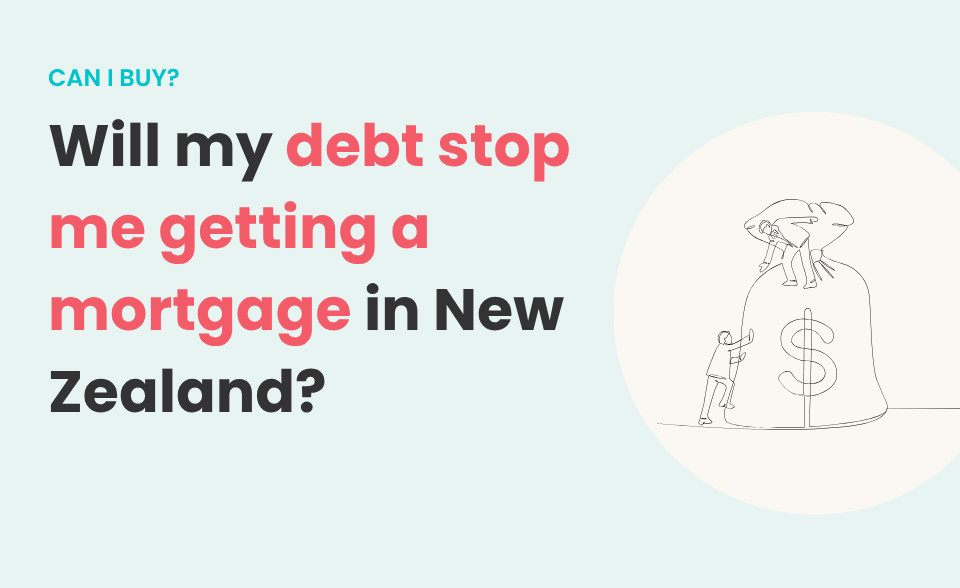
Will my debt stop me getting a mortgage in New Zealand?
One of the biggest myths I hear from first-home buyers is:
“I’ll come back once I’ve paid off all my debt.”
But having debt doesn’t automatically mean you can’t buy a home.
In fact, plenty of first-home buyers get approved for a mortgage while still having a student loan, car loan, credit card or other debt.
The important question is not simply “Do I have debt?”
It’s: “How is my debt affecting what I can borrow, and which debts should I focus on first?”
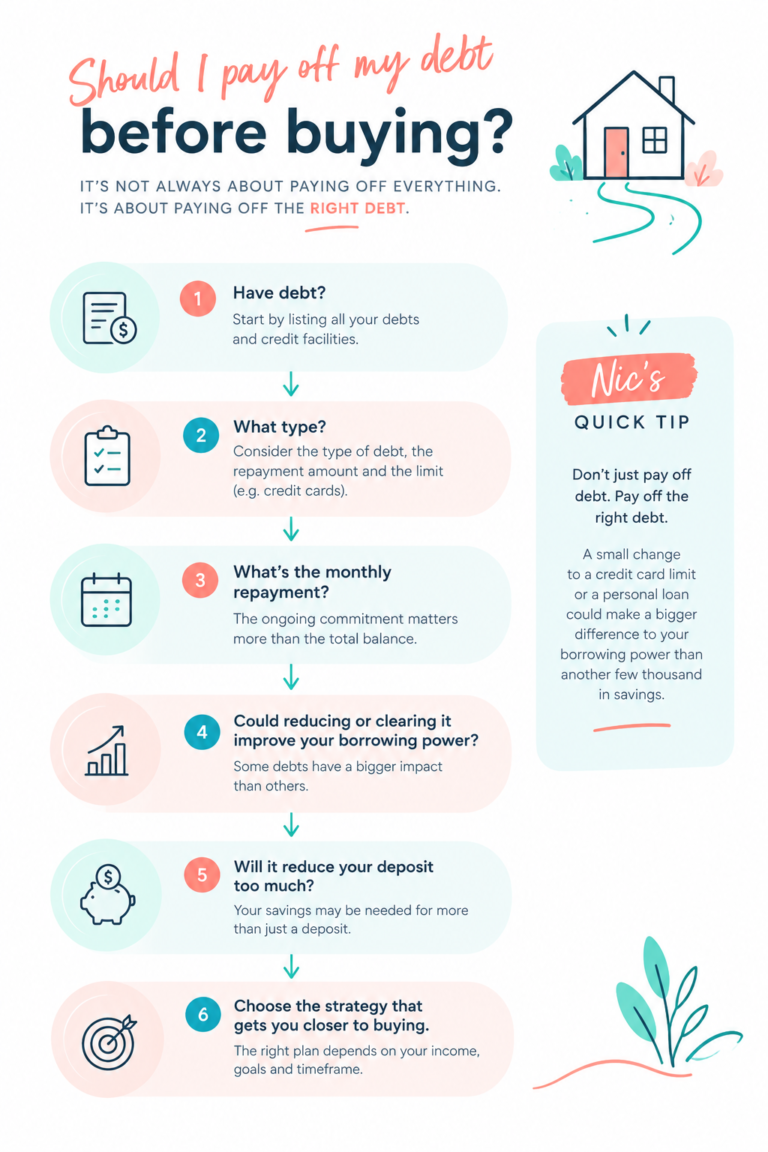
Sometimes paying off a relatively small debt, reducing a credit card limit or tidying up a few old balances can make a bigger difference than spending another year trying to become completely debt-free.
Not all debt affects what you can borrow equally
When a bank assesses a home loan application, it needs to make sure you can comfortably afford your existing commitments as well as your future mortgage repayments, rates, insurance and other homeownership costs.
That means lenders look at the debts you already have and the commitments attached to them.
And this is where things get interesting.
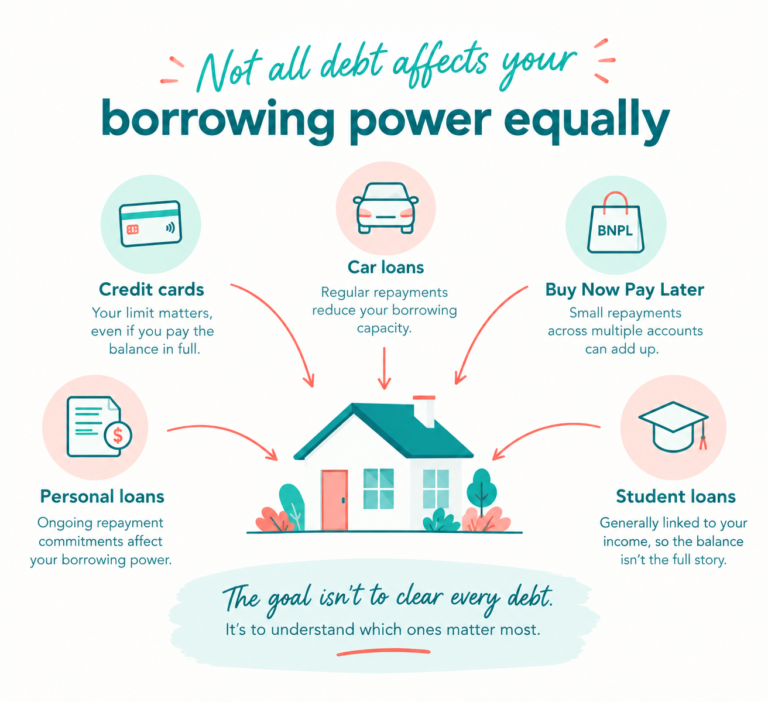
Two people could have the same total amount of debt but have a very different borrowing position depending on what that debt looks like.
A $20,000 student loan, for example, is assessed differently from a $20,000 personal loan because the repayment structures are different.
So simply looking at your total debt balance doesn’t tell you the whole story.
Mortgage debt myths: What's actually true?
I should pay off the biggest debt balance before applying.
Not necessarily — the monthly repayment and how the lender assesses that debt can matter more than the balance itself.
I need to be completely debt-free before I can get a mortgage.
Not true — many first-home buyers are approved with existing student loans, car loans or other debt.
If I pay my credit card off every month, the limit doesn't matter.
Your credit limit can still be considered by lenders, even if you don't carry a balance.
I should use all my savings to pay off debt before applying.
Not always — your savings may be more valuable as part of your deposit or purchase-cost buffer.
I shouldn't even talk to a mortgage adviser until my debt is gone.
Actually, finding out which debts are affecting your borrowing power is often most useful before you start making big financial changes.
1. A student loan isn’t automatically a reason to wait
Student loans are one of the debts I see first-home buyers worry about most.
Often, the concern is:
“I still owe $30,000 on my student loan. Surely I need to pay that off before I can get a mortgage?”
Not necessarily.
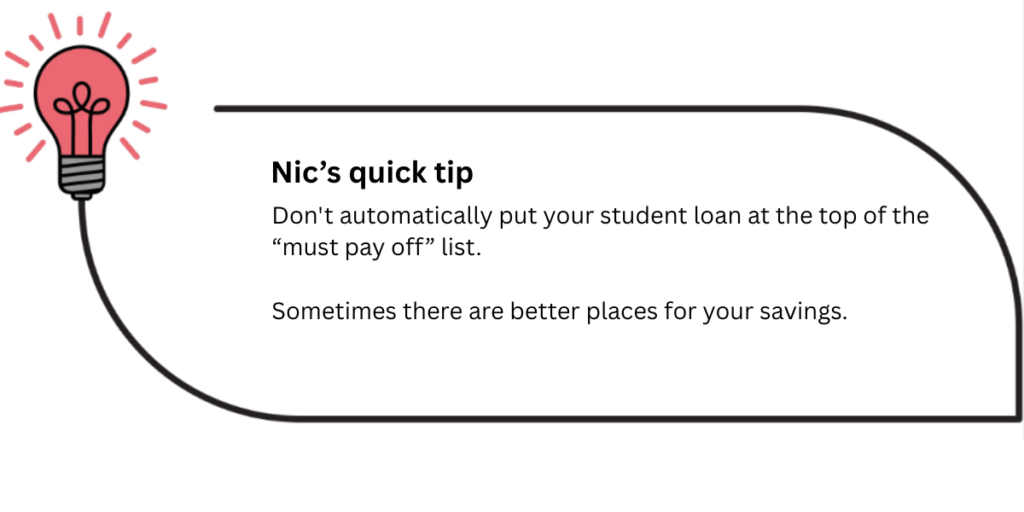
Student loan repayments are generally linked to your income, so from a lending perspective, we’re looking at the regular repayment commitment rather than simply the size of the outstanding balance.
And because NZ student loans are interest-free while you’re eligible for that treatment, using all your savings to clear a large student loan isn’t automatically the best strategy.
If you have a relatively small balance that could be cleared without wiping out your deposit or emergency buffer, that’s a different conversation.
The point is: don’t assume your student loan needs to disappear before you can buy. Work out what impact it is actually having on your borrowing position first.
2. Credit card limits can be surprisingly important
This is one that catches a lot of people out.
You might have a credit card that you pay off in full every month and think:
“I don’t have any credit card debt.”
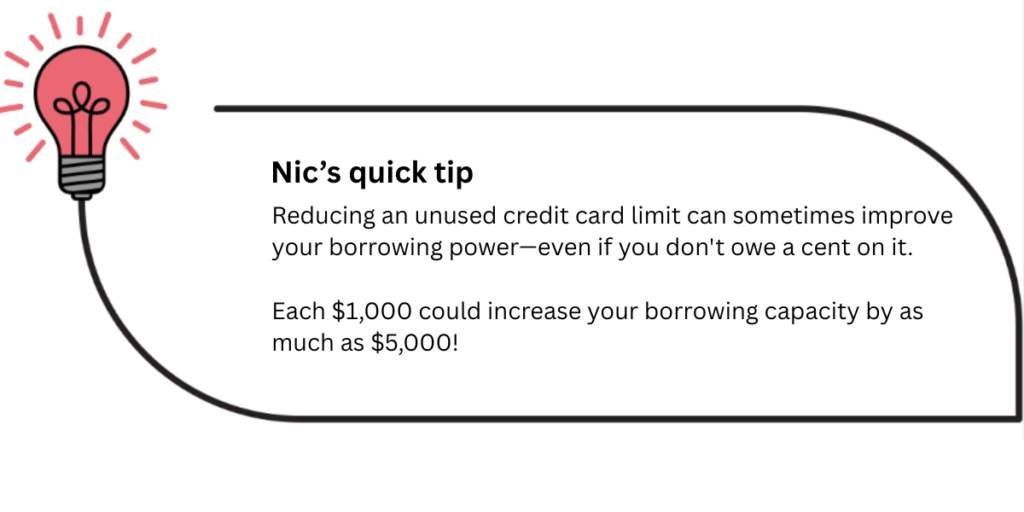
But from a lending perspective, the credit limit itself can matter, not just the balance sitting on the card.
Why?
Because the bank needs to consider the potential commitment associated with that available credit.
So if you have a $10,000 credit card limit but only ever use $1,000 of it, reducing the limit may improve your borrowing position.
Exactly how much difference it makes depends on the lender and your overall circumstances, but this is why I often suggest clients review old or unnecessarily high credit limits before applying for a mortgage.
If you only need a $3,000 limit, there may not be much benefit in keeping a $10,000 limit hanging around.
3. Buy Now Pay Later can add up
Buy Now Pay Later accounts can seem insignificant because the individual repayments are usually small.
But if you have several accounts and several ongoing repayments, they can start to add up.
And there’s another reason I’m a big fan of closing them before you’re trying to buy your first home.
Learning to manage your spending without relying on Buy Now Pay Later can be a really useful part of getting mortgage-ready.
You don’t need to be perfect with money.
But you do want to be able to demonstrate that you’re comfortably managing your income, expenses and savings without constantly needing to move purchases into next month.
So yes, I’m probably going to be your biggest advocate for closing those BNPL accounts if you don’t genuinely need them.
4. Small debts can sometimes be worth clearing
This is where a little bit of planning can make a big difference.
You might have:
- a small personal loan
- an overdraft
- an old credit account
- a small balance owing
- an IRD or WINZ debt
- a few remaining instalments on something you’ve financed
The balance might not look particularly significant.
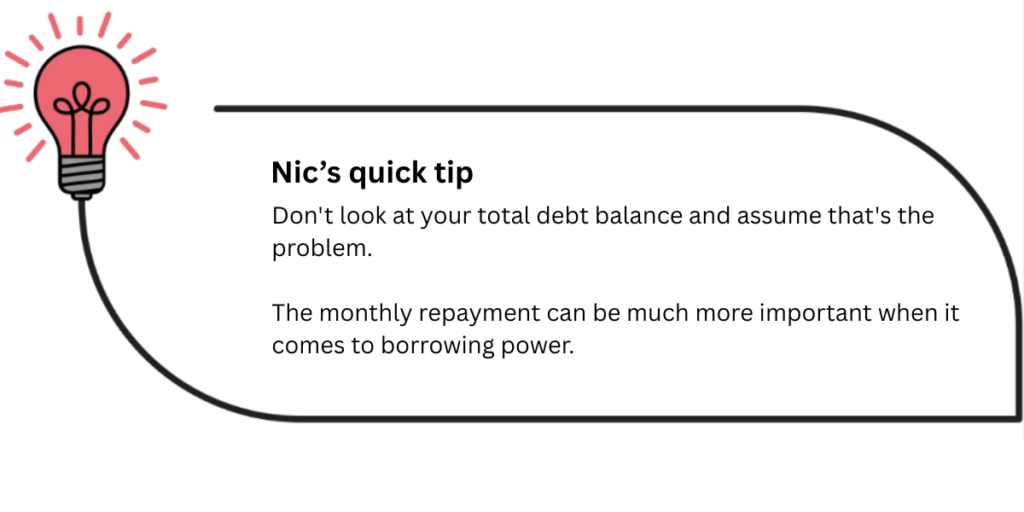
But what matters to the bank is also the ongoing repayment commitment.
A debt with a relatively high monthly repayment can have a much bigger impact on your borrowing capacity than you might expect.
That’s why I don’t recommend simply throwing every spare dollar at whichever debt has the biggest balance.
Instead, ask:
Which debt is actually making the biggest difference to my borrowing position?
That is a much better question.
5. Don’t take on new debt if buying sooner is the goal
This one sounds obvious, but it’s worth saying.
If buying your first home is a priority, think carefully before taking on new commitments in the months leading up to your application.
A new car loan might be perfectly affordable in your day-to-day life.
But the additional repayment could reduce how much the bank is prepared to lend you.
So if you’re thinking:
“We’ll buy a car now and start looking for a house later this year,”
I’d suggest having the mortgage conversation first.
You may find the car is still completely manageable.
Or you may decide that getting into your first home sooner is more important and postpone the car upgrade.
It’s much easier to make that decision when you know the numbers.
6. Don’t make lump sum repayments for the sake of it
This is another mistake I see.
Someone has $5,000 sitting in savings and thinks:
“I’ll put this straight onto my debt because having less debt must be better.”
Not necessarily.
If you’re planning to buy a home, your savings are doing an important job too.
You may need money for your deposit, legal costs, building reports, valuation, moving costs and an emergency buffer.
So before using a large chunk of your savings to clear debt, it’s worth understanding what difference that repayment will actually make.
If paying $5,000 off a particular debt only makes a small difference to your borrowing capacity, while keeping that $5,000 could help you meet your deposit or purchase costs, the better strategy may be to keep the savings.
This is why the right debt strategy depends on the whole picture.
What about debts that will be paid off before settlement?
Sometimes a lender may require certain debts to be cleared as part of the approval conditions.
That doesn’t necessarily mean you need to have everything paid off before you start looking at properties.
It may simply mean you need a plan to clear the debt before settlement.
Knowing this upfront can actually be helpful.
It gives you a clear target and can make your savings plan much more focused.
So, should you pay off your debt before buying?
Sometimes yes.
Sometimes no.
And that’s the important bit.
I often speak to people who have spent years thinking they need to become completely debt-free before they’re allowed to buy a home.
In some cases, paying down debt is absolutely the right move.
But in others, reducing a credit card limit, clearing a small personal loan, closing unnecessary BNPL accounts or simply changing the way you’re allocating your savings could make a meaningful difference.
You don’t need to eliminate every debt before buying a home.
You need to understand which debts matter, what the repayments are doing to your borrowing capacity, and where your money will have the biggest impact.
Every lender has different policies, different risk appetites and different ways of assessing borrowers. Find out why one bank might say no while another says yes.
That’s exactly why good advice matters.
*Your first home faster action*
If you’re thinking about buying in the next 6–12 months, start by making a list of every debt and credit facility you currently have.
Include:
- Your credit card limits
- Buy Now Pay Later accounts
- Personal loans
- Car finance
- Student loans
- Overdrafts
- IRD or other government debts
- Any other ongoing finance commitments
Then ask yourself:
“Which of these could I realistically reduce or clear over the next three months?”
But don’t automatically start paying everything off.
The better next step is to work out which changes will actually improve your position the most.
That’s where getting advice early can save you a lot of time.
Because the goal isn’t to spend the next year becoming completely debt-free.
The goal is to have a plan that gets you into your first home sooner.
If you’re wondering whether your current debt is actually stopping you from buying, get in touch. We can look at your income, deposit, debts and goals together and work out what needs to happen next.
A few questions I get asked all the time
Can I get a mortgage if I already have debt?
Yes. Having existing debt doesn’t automatically prevent you from getting a mortgage. Lenders look at your income, deposit, existing commitments and overall affordability to determine whether the mortgage is manageable.
Want to understand what actually determines how much you can borrow? Read: How much can you really afford to borrow?
Does a student loan affect my ability to get a mortgage in New Zealand?
Yes, a student loan is taken into account because it creates an ongoing repayment commitment. However, the size of the student loan balance doesn’t tell the whole story. In many cases, you don’t need to pay off your student loan before buying a home. And sometimes, if the balance is relatively small, it can make a big difference to improve what you can borrow.
Does a credit card limit affect how much I can borrow?
Yes. Lenders may take your available credit limit into account, even if you regularly pay the card off in full. Reducing an unnecessarily high credit card limit can sometimes improve your borrowing capacity.
Does Buy Now Pay Later affect mortgage applications?
It can. Lenders consider ongoing BNPL commitments when assessing affordability. Having multiple BNPL accounts can also make your finances look more stretched than you might realise, so closing unnecessary accounts can be a worthwhile step before applying.
Should I get a new car before buying a house?
I’d recommend talking to a mortgage adviser first. New lending can reduce your borrowing power, so it’s worth understanding the impact before making a decision.
Should I pay off my debt before saving for a house deposit?
Not necessarily. The best strategy depends on the type of debt, the repayments, your deposit and your timeframe for buying. Sometimes clearing a particular debt will make a meaningful difference to borrowing power; sometimes keeping the money towards your deposit makes more sense.
Should I pay off my car loan before applying for a mortgage?
It depends. A car loan creates a regular repayment commitment, which can reduce borrowing capacity. But using your deposit savings to clear it isn’t automatically the best option. It’s worth calculating the difference in what you can borrow before making a lump-sum repayment.
Do I need to be debt-free to buy my first home?
No. Many first-home buyers purchase while still having student loans, car loans or other debt. The key is making sure your existing commitments are affordable and that your overall finances support the mortgage you’re applying for.
You don’t need to have everything sorted before you start the conversation.
If you’re waiting until you’ve paid off every debt, saved the perfect deposit and got your finances completely “mortgage ready”, you could be waiting longer than necessary.
The first step is simply understanding where you stand.
We can look at your income, deposit, debts and goals and work out what’s actually holding you back — and what changes could make the biggest difference.
Sometimes the answer will be “pay this off first”.
Sometimes it’ll be “keep saving”.
And sometimes you’ll find out you’re already closer than you thought.
If you’re wondering whether your debt is stopping you from buying your first home, get in touch. Let’s work out what needs to happen next.
You might be closer to buying than you think — but the first step is understanding where you stand.
The best advice I can give is simple.
Get advice.
A conversation about your specific situation can give you clarity, confidence and, in many cases, help you buy your first home sooner.